Tata Steel UK chief warns of “difficult” future amid EU cuts
Tata Steel’s UK boss has warned of a “difficult” future ahead amid EU plans to slash steel quotas, prompting an urgent call for the UK to create a “level-playing field”.
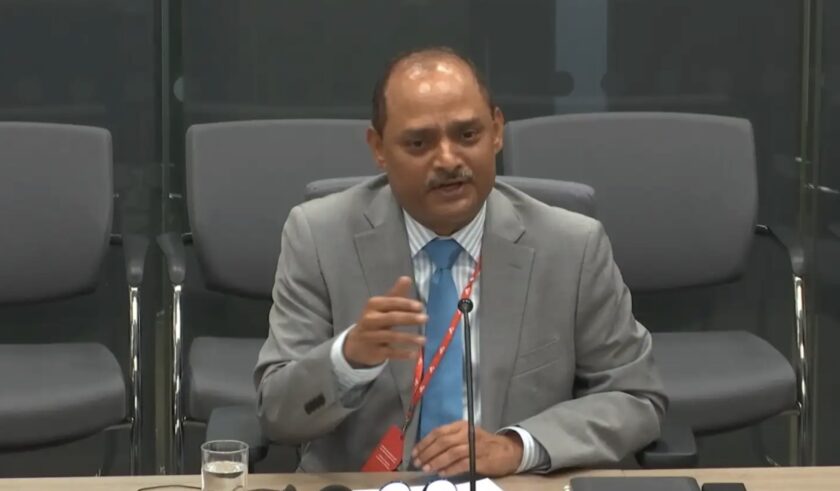
Rajesh Nair, chief executive of Tata Steel UK, urged UK ministers to safeguard the domestic market after the EU announced plans to cut tariff-free steel import quotas by 47%.
Mr Nair called on the UK Government to design new quota systems in a similar way to the EU to safeguard steel by banishing imports, “to ensure we have a level-playing field”.
He said: “Yes, you could look at it as an existential crisis or you could look at it as an opportunity to make a difference and I think the conversations that are happening today are ‘how can we convert this into something that would work for the UK?’.”
Mr Nair warned trade wars and protectionism in steel have become the norm, “so we’ve got to find our own ways of managing the domestic market”.
He told Senedd members: “The UK quotas are significantly disproportionate… these quotas were set up, particularly in flat steel – in which south Wales is really a significant player – in 2017/18 when the demand… was nearly 30% higher than what it is today.
‘We need to bring pace’
“The demand has declined, the quotas have remained where they are. The quotas in general… are 70%… to up to 140% of the demand in some product categories.”
Mr Nair contrasted this with EU quotas of between 15% and 30% of demand before the latest announcement which will see levels reduce further.
He said: “The key thing is the trade situation is becoming more and more difficult, and things are moving pretty fast, so one of the expectations is that we need to bring pace into it….
“But I’m reasonably confident… that the government will also look to do things very similar to what the EU has done… on one hand to protect the UK domestic market and, on the other hand, to work with the EU to ensure we have the right trading interests between the two.”
Appearing before the Senedd’s economy committee today (October 9), Mr Nair called for clarity on how the EU announcement will work and apply to different categories of products.
The chief executive said the first intent would be to work with the EU to secure preferential treatment and concessions as one of the bloc’s biggest long-time trading partners.
‘Great confidence’
Giving evidence just over a year on from the end of traditional steelmaking in Port Talbot, Mr Nair was pleased by progress on transitioning to an electric-arc furnace (EAF).
He said: “I would like to believe we’ve dealt with it in the best possible manner, in the most responsible manner and, one year down the line, I’m happy to see the progress being made, especially on the project in terms of bringing the EAF online by the end of 2027.”
Mr Nair said he had “great confidence” of hitting the 2027 target to start green steelmaking in south Wales after securing planning approval and breaking ground in July.
He told the committee that orders have been placed for about £400m worth of equipment but construction on the ground, which is due to begin in the next few months, will be the key test.
Chris Jaques, chief HR officer, said Tata Steel UK employs just under 5,900 people, down from about 8,150, confirming 2,255 staff have left the business since the announcement.
Mr Jaques told the committee compulsory job losses were minimised to about 120 and Tata Steel UK expects to employ about 5,300 people when the EAF is fully commissioned.
‘Very, very volatile’
Mr Nair was asked about the UK Government passing an emergency bill to protect steelmaking by keeping blast furnaces open in Scunthorpe – but not Port Talbot.
He said Tata Steel had a viable transition plan but Scunthorpe was a “different story”, confirming no talks took place on including Port Talbot in the rescue legislation.
As part of its inquiry on the future of steel, the committee also heard from trade unions which warned commitments on future investment have fallen by the wayside.
Alasdair McDiarmid, assistant general-secretary of the Community union, said: “We’re not where we wanted to be. All of the trade unions thought there was a possibility of a more gradual transition which would have protected jobs and primary steelmaking for longer.”
McDiarmid added: “But the reality is this is where we are: those blast furnaces are not coming back on – whatever some irresponsible politicians might want to suggest.”
Tom Hoyles, a senior organiser from the GMB union, told Senedd members: “There’s obviously a lot of anger at what’s happened but, in one respect, that is done. However, the bigger questions around Port Talbot and British steelmaking remain.
“We’ve seen the announcement in the past few days – it is a very, very volatile sector.”
By Chris Haines, ICNN Senedd reporter
Check live fuel prices near you before you set off.
Spotted something? Got a story? Email news (@) deeside.com

NEW: Add Deeside.com as a preferred source on Google to see more of our trusted coverage when you search.
Latest News