Planning inspectors press Uniper on flood and CO2 plans for new Connah’s Quay power station
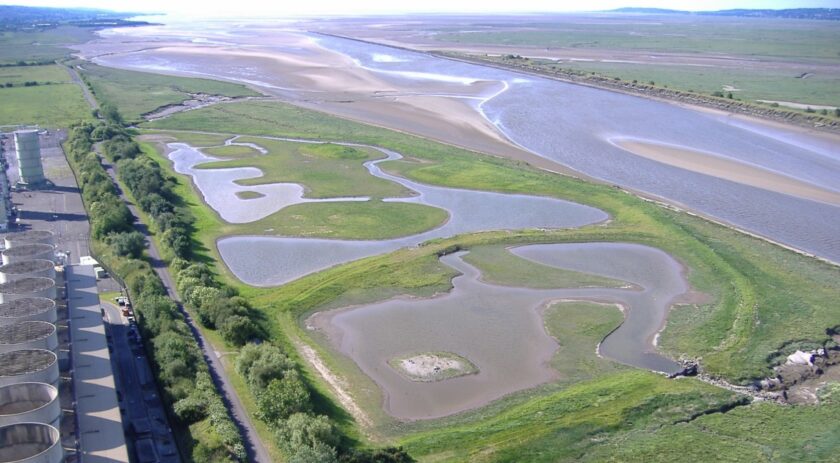
Planning inspectors examining Uniper UK’s proposed Connah’s Quay Low Carbon Power Project have issued a second round of written questions on flood risk, sewage, accidental CO2 release and saltmarsh.
The questions were issued by the Examining Authority this week and published on the Planning Inspectorate’s national infrastructure portal.
The proposed project would build a new gas-fired power station with carbon capture at the existing Connah’s Quay power station site.
Captured CO2 would be transferred to the HyNet pipeline for storage offshore.
Inspectors have asked Uniper what would happen if HyNet could not accept the CO2.
They want to know whether the new power station would continue to operate in those circumstances, or whether operations would have to stop.
Inspectors have asked Uniper whether it has tested the site against the worst-case sea level rise scenario.
UK Government guidance says that scenario, known as H++, should be used when assessing critical national infrastructure on the coast.
They have also asked about the combined risk from very high tides, storm surge, wind waves and swell.
They want to know whether the flood defences could be overtopped or breached in those conditions.
Inspectors have asked Uniper to clarify what appears to be a conflict in its submitted material on saltmarsh.
In one earlier response, Uniper said saltmarsh would be created to compensate for nitrogen and ammonia deposition on the Dee Estuary protected wildlife sites and the Deeside and Buckley Newts site.
In another, the company said the saltmarsh was not being created, and that natural processes were being allowed to develop it instead.
It also said the saltmarsh was not intended to address air quality.
The current foul water treatment at the site has been described in Uniper’s own submitted documents as “sub-optimal”.
Sewage is collected and taken away for disposal.
Inspectors want to know why, and whether the new development will have the same problem.
Inspectors have also asked Uniper to set out what an accidental release of gas from the carbon capture plant or the HyNet pipeline would look like.
They have asked which communities or habitats would be most at risk because of their low-lying nature or proximity to release points.
They have also asked how those communities would be warned, and what would be done to disperse the gas.
Inspectors have asked Uniper and Flintshire County Council what further support could be provided to the local community.
They referred to issues raised at an earlier open floor hearing, including support for the energy needs of local swimming pools, and improvements at the site boundary to reduce risk for college students walking past.
Uniper’s responses, when published, will appear on the Planning Inspectorate portal.
Check live fuel prices near you before you set off.
Spotted something? Got a story? Email news (@) deeside.com

NEW: Add Deeside.com as a preferred source on Google to see more of our trusted coverage when you search.
Latest News