Emergency drone trialled by Welsh Ambulance Service
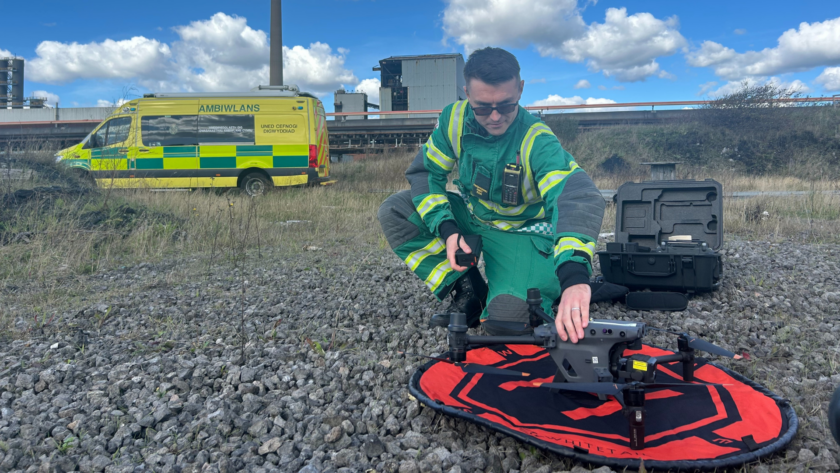
The Welsh Ambulance Service has successfully deployed its new drone for the first time during an emergency response following a road traffic collision.
The drone was used by the Trust’s Hazardous Area Response Team while working alongside South Wales Police and South Wales Fire and Rescue Service at the scene of a collision in Penderyn, Rhondda Cynon Taf.
At the time of the incident, it was unclear how many people had been travelling in the vehicle.
There were concerns that additional occupants may have left the scene and collapsed in nearby woodland.
Ground crews initially searched the area using handheld thermal imaging cameras, but due to the size and terrain of the surrounding fields and woodland, an aerial thermal search was identified as the safest and most effective option.
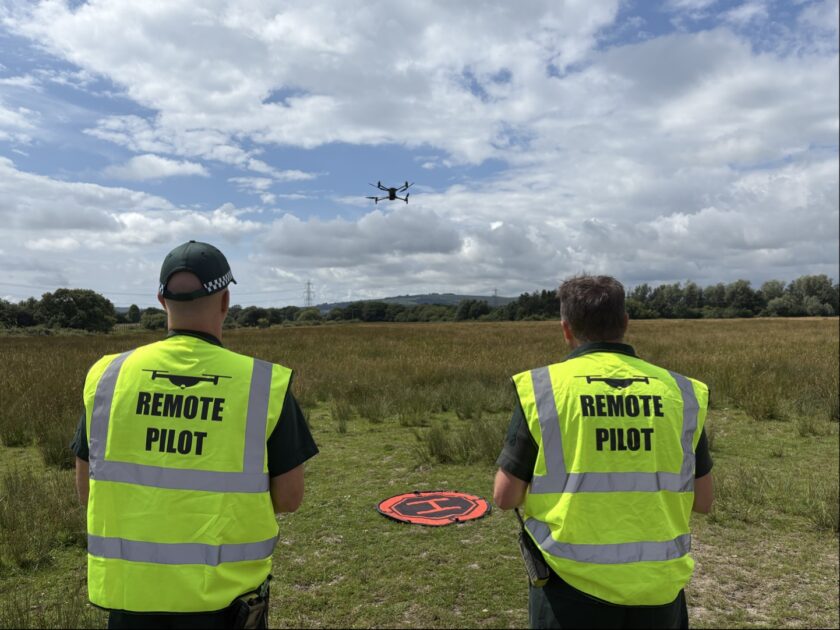
The new drone is equipped with specialist search capabilities, including thermal imaging, and can be deployed in rain and winds of up to 20 miles an hour.
It also offers a live streaming portal, allowing the camera feed to be shared with authorised personnel to provide real-time situational awareness.
Lee Brooks, Executive Director of Operations at the Welsh Ambulance Service, said: “This first deployment of the drone has clearly demonstrated the benefits in being able to rapidly assess large and complex environments for potential casualties.
“In a life-threatening emergency, time is critical and finding the casualty as quickly as possible really could be the difference between life and death.
“Searching the same area manually with handheld thermal imaging cameras would have taken far longer and in a situation where every second counts, the operators of the drone were able to rapidly determine whether the driver of the vehicle was the only casualty.”
Specially trained drone pilots from the Hazardous Area Response Team were required to complete theory and practical flight training to obtain general and visual line of sight licences from the Civil Aviation Authority.
Scott Hanson, Digital Innovation Lead, said: “Having the drone provides situational awareness to our HART paramedics, giving them an enhanced overview of the incidents they are responding to.
“This will really benefit patients in difficult to reach or inaccessible locations as the drones have the ability to use thermal imaging alongside high resolution cameras to locate casualties.
“These capabilities will help clinicians to spot patients in remote locations such as mountainous areas or incidents in water such as rivers or lakes.
“The drone has the potential to quickly identify casualties, even in the dark.”
Following the search, the HART team confirmed that the driver was the only occupant of the vehicle and that there were no additional casualties in the immediate area.
Jonny Sammut, the Trust’s Director of Digital Services, said: “This is the first step in how we use drone technology to support emergency care.
“By proving this capability now, we are laying the groundwork for the next phase of the programme, moving towards Beyond Visual Line of Sight operations that will allow drones to operate safely, at scale, and as part of everyday national ambulance service response, including the rapid delivery of critical medical equipment such as defibrillators.”
Check live fuel prices near you before you set off.
Spotted something? Got a story? Email news (@) deeside.com

NEW: Add Deeside.com as a preferred source on Google to see more of our trusted coverage when you search.
Latest News