Chester scientists study how to save world’s rarest dove
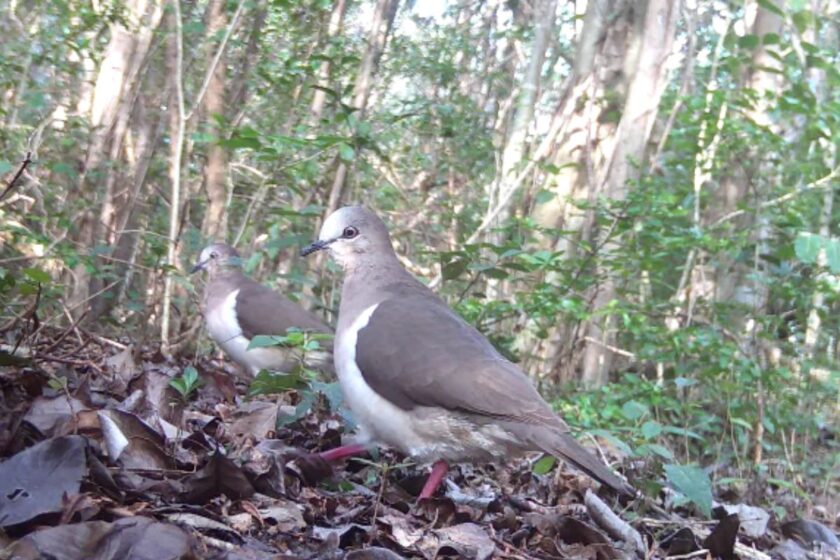
Researchers from the University of Chester are carrying out vital work aimed at preventing one of the world’s rarest birds from becoming extinct.
The Grenada Dove, Leptotila wellsi, is listed as critically endangered, with an estimated population of around 160 mature individuals remaining.
The species is found only on the Caribbean island of Grenada and faces multiple threats, including habitat loss, invasive predators, disease and population declines linked to hurricanes.
A team from the University’s School of Natural Sciences, Dr Wise, Dr Matt Geary and Dr Lottie Hosie, has published a new study examining the bird’s chances of survival.
The paper, Assessing threats and conservation action using population viability analysis for the Critically Endangered Grenada Dove Leptotila wellsi, is the first of its kind for the species.
The research used population viability analysis to assess extinction risk across the dove’s two remaining populations and to test how different threats and conservation strategies could affect its future.
The study drew on field data, long-term population counts and information from closely related species.
The findings suggest the western population of the Grenada Dove has a 100 per cent probability of extinction within an average of 19.2 years, while the southwest population has a 91.3 per cent probability of extinction within 50 years.
The analysis also found that extinction risk rises sharply under scenarios involving tourist development, disease transmission and unbalanced sex ratios. Loss of forest habitat due to commercial development was identified as a major threat.
Researchers concluded that immediate demographic and genetic monitoring is needed, alongside targeted management, to prevent the permanent loss of the species.
Of the conservation options assessed, population supplementation, such as establishing new populations or captive breeding, was found to be the most effective.
The study highlighted gaps in existing data, leading Dr Wise and Dr Geary to apply for funding to carry out further research. They were awarded a $12,000 grant from the Toledo Zoo in Ohio and the IUCN Pigeon and Dove Specialist Group to conduct territory surveys and deploy camera traps.
Preliminary findings from this work detected Grenada Doves at both known sites, with higher detection rates at Mount Hartman.
However, the research also recorded widespread invasive predators, including opossums, mongooses and feral dogs. The team also warned that the proximity of one habitat to an expanding landfill poses a direct risk.
Following the additional data collection, the researchers were invited to contribute to the Grenada Dove Conservation Action Planning workshop, presenting findings on genetics and population viability.
The workshop, held at St George’s University in Grenada, brought together government bodies, conservation groups, communities and academics to develop a 10-year conservation strategy for the species.
Dr Wise said:
“Urgent action is needed to protect the Grenada Dove and prevent its extinction. It has been a privilege to work on such a rare species and contribute to the management plan which will hopefully secure its survival into the future.
“Our research underscores the pressing need for demographic and genetic monitoring and supports the recommendations of the Species Recovery Plan, which includes predator control, habitat management, and establishing captive breeding. The PVA provides a vital evidence base for conservation planning and highlights the importance of proactive management to prevent the extinction of this unique Caribbean species.”
Check live fuel prices near you before you set off.
Spotted something? Got a story? Email news (@) deeside.com

NEW: Add Deeside.com as a preferred source on Google to see more of our trusted coverage when you search.
Latest News