Grade II listed Hawarden Bridge faces structural repairs as walls crack and lean
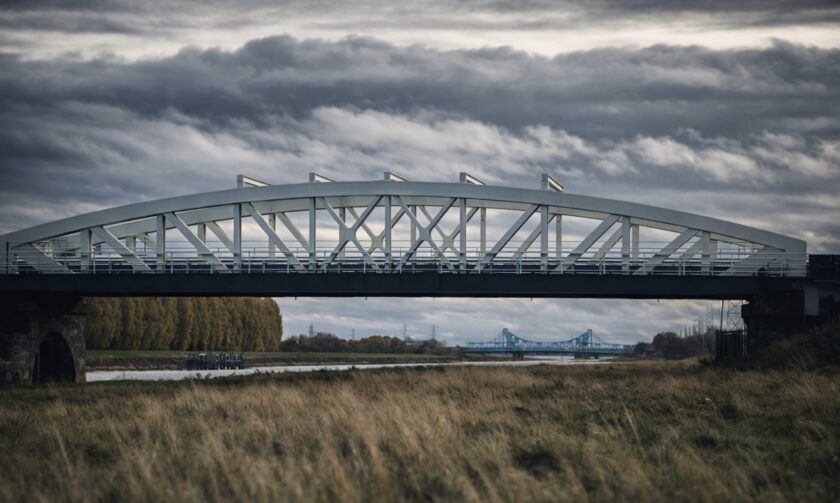
Part of Hawarden Bridge near Shotton is moving, and Network Rail wants permission to stop it.
Network Rail has applied to Flintshire County Council for Listed Building Consent, the formal permission required before carrying out works on a legally protected historic structure, to repair and reinforce Pier 7, one of seven masonry arch spans on the bridge’s southwestern approach across the River Dee flood plain.
Engineers have been monitoring the pier and the picture is not improving.
The retaining walls on both sides are leaning, and the lean is increasing over time.
Crack measurements show the downside retaining wall has settled relative to the rest of the structure, and the settlement is continuing.
Defects recorded during a site inspection include a spandrel wall, the wall above the arch that carries the deck above it, that is bulging and cracked.
A vertical gap has opened between the spandrel wall and the ballast wall behind it.
The ballast wall itself has split into two separate pieces.
On the other side of the pier, a full-height vertical crack runs through the retaining wall, a stepped fracture cuts through the spandrel wall, and a diagonal fracture runs through the arch.
A section of parapet wall, the low protective wall along the edge of the bridge, is missing.
Engineers attribute the failures to excessive earth pressure in the material packed behind the walls, insufficient resistance to that pressure in the masonry, and possible failure of the foundations beneath the downside retaining wall.
Without intervention, Network Rail says continued movement and water ingress will accelerate the deterioration and are likely to require more extensive and more intrusive work further down the line.
Two repair approaches were considered and rejected before the preferred option was settled on.
The first would have replaced the existing walls with reinforced concrete retaining walls, with new brickwork applied on the outside.
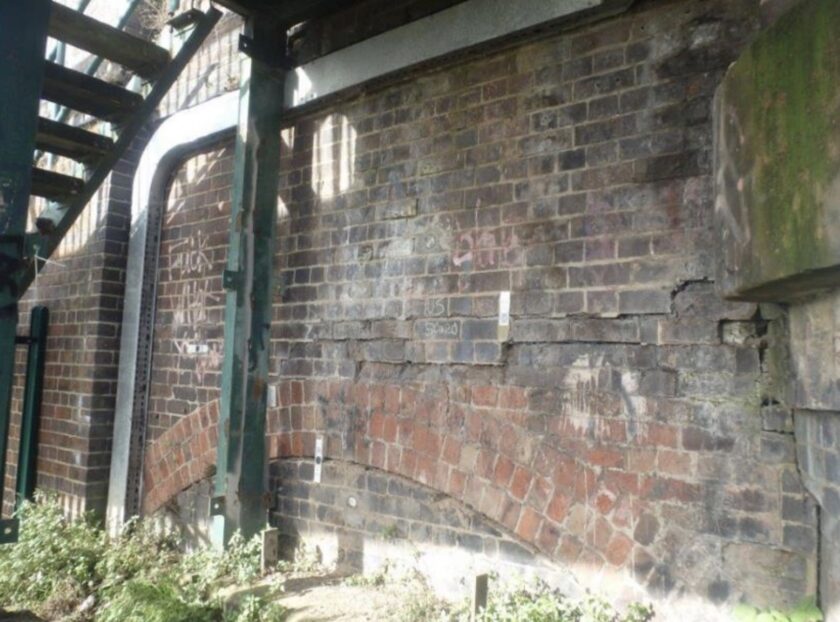
[Photograph of the upside Spandrel Wall]
That was rejected because it would have concealed string courses and other original architectural details in the masonry, causing harm to the appearance of the listed structure.
The second involved underpinning the walls with piles and large ground beams.
That was also ruled out because the ground beams would have sat above ground level, obscuring the stepped stonework at the base of the pier and introducing a visually modern element into the historic fabric.
The plan now submitted to Flintshire County Council keeps the original brickwork visible and unchanged from the outside.
It involves excavating the material beneath the track and replacing it with a lightweight fill called Porofoam, which reduces the pressure being exerted on the walls.
Ductile pattress plates, metal fixing plates bolted through the masonry, will be installed to tie the walls together.
Network Rail notes that pattress plates were a standard repair method in late Victorian construction, making them consistent with the age and character of the bridge.
Reinforcement bars will be installed internally, drainage added to address ongoing water ingress, and brickwork repairs and repointing carried out throughout the affected area.
Missing parapet sections will be rebuilt using salvaged original stonework wherever possible, with matched replacements used where stones cannot be recovered.
Modern palisade fencing and two metal stairways added to the pier in more recent decades will be removed, which Network Rail says will improve the overall appearance of the pier within the wider listed structure.
Hawarden Bridge carries the railway line linking north Wales with the Wirral and north-west England.
It was built between 1887 and 1889 by engineer Francis Fox for the Chester and Connah’s Quay Railway, and it is a Grade II listed structure under two separate designations, both recorded on 18 May 2005.
The bridge’s central swing span, which could historically open within approximately 40 seconds to allow vessels through on the River Dee, has since been welded shut as river traffic on that stretch declined.
Flintshire County Council has not yet confirmed when the application will be determined.
Check live fuel prices near you before you set off.
Spotted something? Got a story? Email news (@) deeside.com

NEW: Add Deeside.com as a preferred source on Google to see more of our trusted coverage when you search.
Latest News