Deeside Parkway station has no cost estimate or start date, Welsh Government confirms
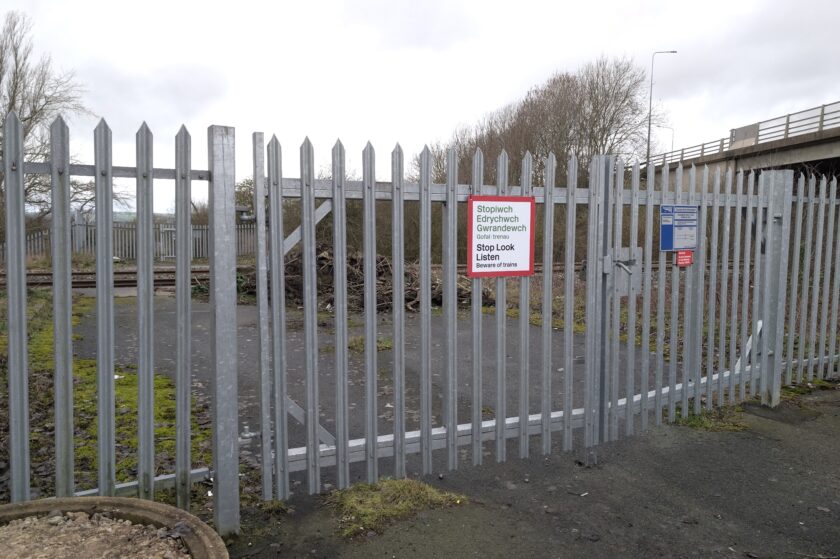
A Labour MS told the Senedd on Tuesday that the proposed Deeside Parkway station “will now be delivered at the end of next year.”
The same week, the Welsh Government told Deeside.com in writing that the station’s feasibility and preliminary design work is at “a very early stage,” that no cost estimate has been produced, and that no construction start date has been confirmed.
First Minister Eluned Morgan did not correct the claim when it was made on the chamber floor.
Carolyn Thomas MS, a North Wales regional member, made the statement during questions to the First Minister on the delivery of Network North Wales.
She said she had recently spoken at the Deeside business forum transport seminar alongside Transport for Wales and Flintshire County Council, and described the “excitement” about the station as “palpable.”
Ms Thomas said: “The new parkway station will now be delivered at the end of next year. We’ve been campaigning on that for a long time. Tick, that’s been delivered.”
The Welsh Government’s written answers to Deeside.com
Deeside.com submitted five questions to the Welsh Government about the station’s cost, funding and timeline following the joint announcement on 18 February of a £14 billion rail investment pipeline for Wales.
Asked for the total estimated cost, the Welsh Government said: “It is too early to say. Feasibility and preliminary design work is still at a very early stage, and engineering consultants are assisting with this.”
Asked whether a formal construction start date had been confirmed, it said: “Initial feasibility work is underway. Timescales will be firmed up based on preliminary designs and consents required.”
The Welsh Government confirmed that the funders for the full package of enhancements on the Wrexham-Bidston corridor include the North Wales Growth Fund, the UK Government’s Rail Network Enhancements Pipeline using funds from the 2025 spending review, and local investment zones.
The funding split between those sources has not been agreed.
The Welsh Government did not confirm which of the three funders will pay for which individual scheme on the corridor.
Asked whether the Deeside station budget is ring-fenced or shared with Padeswood freight facility upgrades and level crossing removal at Buckley station on the same line, the Welsh Government said the funding formula “is being discussed with all funders in conjunction with the other enhancements being developed for the Wrexham-Bidston corridor, including the remodelling of Padeswood sidings and the removal of level crossings at Buckley station.”
The Welsh Government did not confirm the station budget is ring-fenced.
Deeside.com also asked whether the station sits inside or outside the £445 million allocated by the UK Government in the 2025 spending review, the only committed funding confirmed by the Welsh Government.
The Welsh Government referred the question back to the same answer about the three named funders and the ongoing discussions.
Ken Skates, the Cabinet Secretary for Transport and North Wales, said during a site visit this week that the station is funded and in the design stage, with a target completion date of late 2027.
His position and Ms Thomas’s Senedd statement align with each other but not with the Welsh Government’s written answers.
How the funding is meant to work
The UK Government’s own announcement on 18 February sets out a funding mechanism the Welsh Government did not explain in its answers.
The statement says the UK and Welsh Governments have worked with the North Wales Growth Deal, Ambition North Wales, who have “agreed to co-fund the improvements to the main line arrangements into the Padeswood cement works freight facility.”
It then states: “This funding will enable UK Government to use its existing funding agreed at the spending review to take forward further schemes on this line, including an additional station to service Deeside Industrial Park, and safety, capacity and line speed improvements at Buckley.”
The Growth Deal pays for the Padeswood freight works, which frees up spending review money for the Deeside station and Buckley improvements.
That implies the Deeside station funding comes from the £445 million spending review pot, released by the Growth Deal covering Padeswood separately.
It also means the Deeside station depends on the Padeswood works being funded and delivered.
First Minister Eluned Morgan confirmed that sequencing in the same announcement, saying: “In the near term, I’m pleased to see backing for the essential work at Padeswood and Buckley. This will transform journeys between Wrexham and Liverpool, unlock economic opportunities across north Wales, and allow plans for the new Deeside station to accelerate.”
Her language frames Deeside as something that will “accelerate” once Padeswood and Buckley are dealt with, not as a project already in delivery.
The “no long-term project is guaranteed” admission.
In the same Senedd session yesterday, Llyr Gruffydd MS, Plaid Cymru’s North Wales regional member, challenged the First Minister directly on the £14 billion figure.
Mr Gruffydd said the £14 billion “doesn’t have a secured funding stream” and that “there’s no clear allocation in any current or, as far as we know, existing budget anywhere.”
He compared the approach to that of the previous UK Conservative Government: “It’s a familiar tactic, straight out of the Boris Johnson and Rishi Sunak playbook, because they promised electrification of the north Wales line.”
He asked: “Where in the Department for Transport or in the Treasury is the budget line for this money?”
Eluned Morgan replied: “No long-term project is guaranteed. HS2 is not guaranteed. Let’s be absolutely clear that that is the nature of democracy. What we’re saying is, if Labour remains in power, that commitment is absolutely there.”
She added that the programme had been worked up over two years and that the Treasury, not just the Department for Transport, had signed it off.
In the same exchange, she confirmed the Welsh Government has committed £13 million to kick-start Network North Wales.
Gareth Davies MS, Welsh Conservative, told the Senedd that of the seven new stations announced, only one is in north Wales, and that “many of the supposed new stations have been in the pipeline for years.”
He cited an estimated £4 billion in lost consequential funding because HS2 has been classified as an England and Wales project.
The £14 billion question
The £14 billion headline attached to the joint announcement on 18 February does not represent committed funding.
Transport for Wales’s own vision document, “Today, Tomorrow, Together,” published alongside the announcement, identifies £4.4 billion of developed schemes across Wales that could be delivered over 15 to 20 years.
A further set of proposals is described as a “more than £10 billion funding scenario” requiring additional development work before construction could begin.
The Welsh Government has confirmed that the only committed UK Government funding is the £445 million from the spending review.
That covers £302 million for infrastructure, £95 million for development, and £48 million for Core Valley Lines enhancements.
The UK Government’s own statement confirms the rest depends on future decisions: “The pipeline is a generational transformational commitment, with exact, additional UKG funding allocations to be confirmed at future Spending Reviews.”
TfW Chair Vernon Everitt acknowledged in the document’s foreword that “for major programmes like Network North Wales, the current level of funding only represents an initial step towards our full ambition.”
The UK Government headline states the seven new stations are being built “using the almost half a billion pounds promised this Spending Review.”
The detail shows three different funding arrangements.
The five Burns Commission stations in south-east Wales are backed by £90 million from the spending review, with construction on all five to begin this year and two expected to start construction by 2029.
Cardiff Parkway has “additional UK Government funding” with the exact contribution from each partner and timeline to be determined between UK Government, Welsh Government and private investors.
Deeside is funded through the Growth Deal and spending review mechanism described above.
The seven stations are not all funded from the same place or on the same terms.
Analysis by the Green Signals podcast found the £14 billion headline does not hold up.
The podcast is presented by Nigel Harris, former managing editor of RAIL magazine, and Richard Bowker, former chair of the Strategic Rail Authority.
When pressed on how the figure was calculated, the UK Government, Welsh Government and Transport for Wales gave inconsistent answers.
Each directed journalists to ask the others.
Steph Foster, Green Signals presenter and former acting editor of RAIL magazine, said the only committed UK Government funding was the £445 million from the spending review.
She added that the wider announcement had “a whiff of Northern Powerhouse Rail about it.”
Llyr Gruffydd named Professor Mark Barry as sharing the same concern about the absence of a secured funding stream.
What the TfW document says about north Wales
The TfW document puts cost estimates on individual north Wales schemes for the first time.
The Deeside Industrial Park station and Shotton Interchange are each estimated at under £50 million.
Improvements at Padeswood on the Wrexham to Liverpool line are also listed at under £50 million.
Padeswood is the only north Wales Metro scheme explicitly marked as supported by the 2025 spending review.
Beyond those initial works, the costs rise steeply.
Direct Wrexham to Liverpool services using battery electric trains are estimated at over £150 million.
Wider frequency improvements on the same line sit at £50 million to £150 million.
Capacity upgrades at Chester, described in the document as a “bottleneck” for north Wales services, carry a £50 million to £150 million estimate.
On the North Wales Main Line, additional stopping services between Chester and Llandudno Junction are estimated at £50 million to £150 million.
These are the works needed to deliver the promised 50 per cent service increase.
Electrification to Holyhead, listed as an aspiration, would cost over £150 million.
TfW says the North Wales Main Line programme alone would support 1,400 construction jobs.
None of those larger schemes is marked as funded by the spending review.
Senedd debate
Plaid Cymru has tabled an opposition debate for today, Wednesday 4 March on the rail network.
The motion, tabled by Heledd Fychan MS, describes the announcement as “largely uncosted during the current UK parliamentary term.”
It regrets “the historic and systematic underfunding of the Welsh rail network by successive UK Governments” and further regrets that the Welsh Government “has had to spend in non-devolved areas to make up the shortfall, such as on the core valley lines.”
The motion notes “the absence of concrete promises and a plan to fund the pipeline of rail infrastructure projects through upcoming UK Government spending reviews.”
It calls on the Welsh Government to seek clarity from Westminster on when the proposed investment will arrive and to what extent it depends on budget decisions by a future UK Government.
It also calls for full devolution of rail infrastructure to Wales, in line with powers already held by Scotland and Northern Ireland.
Plaid Cymru’s Westminster leader Liz Saville Roberts said the announcement would feel “like déjà vu to many people in Wales.”
She described it as a reheating of earlier promises.
The Welsh Government has tabled an amendment through Jane Hutt MS that accuses Plaid Cymru of a “mistaken belief that the core valley lines are not devolved,” noting devolution took place in 2020.
The amendment states that “views recently expressed in the media by observers demonstrate that the argument over rail funding has now been won” and backs the TfW vision document by name.
It does not name the observers or the media outlets cited.
The Welsh Conservatives have tabled a separate amendment through Paul Davies MS calling on the Welsh Government to press Westminster to reinstate funding for electrification of the North Wales Main Line and to provide consequential funding for Wales from HS2 and the Oxford to Cambridge rail investment.
The electrification call connects directly to the TfW document, which lists Holyhead electrification as an unfunded aspiration costing over £150 million.
The Davies amendment also states that the UK Government’s recent announcement on new rail stations “were not new commitments as they were announced in previous spending reviews.”
Separately, £30 million has been allocated for safety improvements on the North Wales Coast Main Line, including footbridges to replace level crossings at Prestatyn and Abergele.
Transport for Wales services on the coast are due to increase by 50 per cent from May 2026.
The wider Network North Wales programme covers electrification, new services and station upgrades. It sits within the unfunded pipeline. No delivery timeline has been set.
Ken Skates told the Senedd earlier this year that Network North Wales is “not merely a collection of projects” but “a declaration that North Wales will no longer be an afterthought.”
The TfW document now puts a price on that declaration.
The First Minister told the Senedd yesterday that “no long-term project is guaranteed” and that the commitment depends on Labour remaining in power.
The Welsh Government’s written answers to Deeside.com show that for Deeside Parkway, the cost has not been calculated, the funders have not agreed which of them will pay for what, and the budget is not ring-fenced from other works on the same line.
The UK Government’s own announcement shows the station depends on a chain of funding that starts with the Growth Deal paying for Padeswood, freeing spending review money for Deeside and Buckley.
Check live fuel prices near you before you set off.
Spotted something? Got a story? Email news (@) deeside.com

NEW: Add Deeside.com as a preferred source on Google to see more of our trusted coverage when you search.
Latest News