How ELISA Kits Help Scientists Detect and Quantify Proteins in the Lab
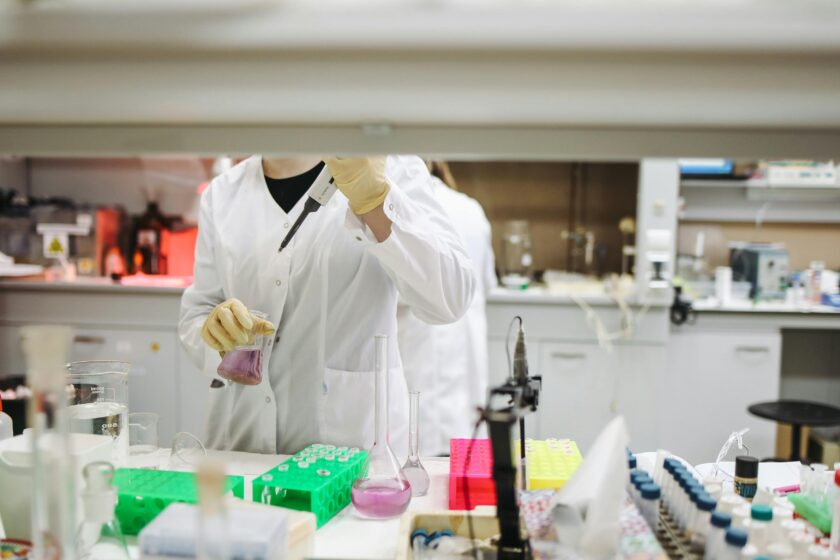
Biochemistry and immunology can feel like a different language when you’re new to the lab. There are long names to remember, pathways that twist in every direction, and plenty of techniques that seem complicated the first time you see them. One of those techniques is ELISA – and it pops up a lot.
Inside an ELISA Kit: What’s in the Box and How It All Works Together
Opening an ELISA kit for the first time can be a bit like unpacking a board game you’ve never played before. There’s a coated plate, several bottles, tiny tubes and a lot of labels. At first, it’s not obvious what to do with each piece, but once you know their roles, the whole setup becomes much easier to follow.
A typical kit will include:
- a microliter plate, often pre-coated with an antibody or antigen
- standards with known concentrations, plus positive and sometimes negative controls
- different buffers for dilution, blocking and washing
- a detection antibody (or a pair of antibodies, one of them enzyme-linked)
- a substrate that changes color when the enzyme reacts with it
- a stop solution to “freeze” the color so you can read it
Each of these items moves you one step closer to turning a clear sample into a measurable signal. The coated plate captures your target, the standards help you build a calibration curve, the detection system adds the enzyme and the substrate turns the invisible into something your plate reader can see.
Ready-made protocols and matched reagents are more than just a time-saver. When the coating, standards, controls and detection system are designed to work together, you get more consistent results from plate to plate. That’s why many labs lean on well-validated elisa kits together with reliable laboratory equipment when they need data they can trust.
You can think of the kit as the “chemistry” part of the assay. The rest of the lab – pipettes, incubators, washers and readers – provides the conditions that allow that chemistry to behave the way it should. Understanding what’s in the box is the first step; the next is knowing what ELISA actually is and why we use it so often.
What Is ELISA, and Why Do We Use It?
ELISA stands for “enzyme-linked immunosorbent assay”. The name sounds heavy, but the concept is quite straightforward. The method uses antibodies attached to a solid surface and couples them with an enzyme that produces a signal. In practice, it lets you “catch” specific molecules and then convert that binding into a color or light you can measure.
Because ELISA is quite sensitive and specific, and because it works well in 96-well plates, it’s ideal when you have many samples to test under similar conditions. Instead of running one tube at a time, you can screen an entire plate, compare samples side by side and generate quantitative data in a single run.
So even though the full name is a mouthful, the idea is simple: ELISA uses antibodies as very picky “hooks” and enzymes as signal amplifiers, all arranged in a microplate so that small, invisible differences become clear numbers on your screen.
The Lab Equipment That Makes ELISA Results Trustworthy
It’s tempting to see ELISA as “just the kit”, but the quality of your results depends just as much on the tools you use around it. Even a perfectly designed kit can give messy data if pipettes are off, incubations are uneven or the plate reader isn’t behaving.
Take pipettes, for example. ELISA usually works with small volumes, and a tiny error can bend your standard curve or create strange differences between wells. Well-maintained single-channel and multichannel pipettes, checked and calibrated regularly, help make sure that every well gets the same volume of sample, reagent and substrate. Using suitable tips and keeping your pipetting technique steady – same angle, speed and depth – reduces random variation even further.
On top of that, you have washers and plate readers. A good washing system removes unbound reagents without stripping off what’s attached to the plate. A reliable reader measures absorbance at the right wavelength and gives you consistent readings from one experiment to the next. When everything is working properly together – kit plus equipment – ELISA turns into a dependable method rather than a constant struggle with background noise and odd values.
Check live fuel prices near you before you set off.
Spotted something? Got a story? Email news (@) deeside.com

NEW: Add Deeside.com as a preferred source on Google to see more of our trusted coverage when you search.
Latest News