Owners of domestic oil tanks urged to carry out maintenance checks ahead of winter months
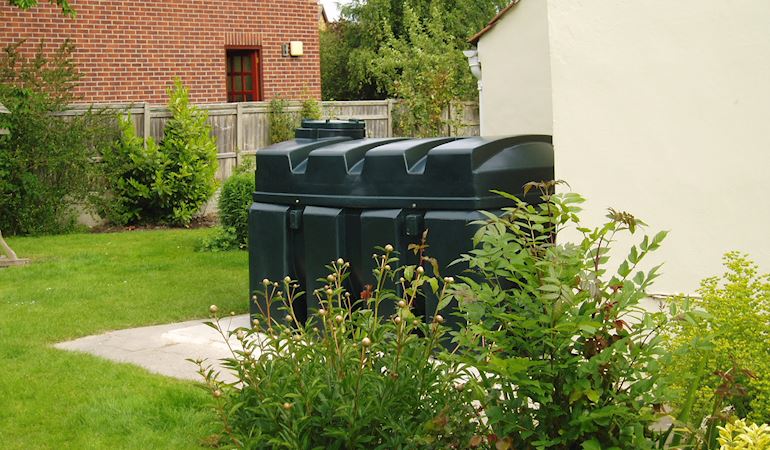
Natural Resources Wales (NRW) is urging owners of domestic oil tanks to carry out regular maintenance checks to avoid environmental damage from fuel spillages this winter.
Homeowners who store oil have a legal responsibility to make sure their storage facilities do not cause pollution, yet a large number of incidents resulting from tank leaks still occur each year.
Leaked fuel causes far-reaching damage to the environment – it can kill plants, harm wildlife, pollute rivers and contaminate drinking water.
Fuel loss can also leave homeowners facing the cost of replacing oil as well as potentially having to pay thousands of pounds to clean up an oil spill.
Huw Jones, Environment Team Leader with NRW:
“As we enter the wet and wintry season, it is particularly important that homeowners regularly check tanks and their pipework to make sure they are well maintained.
“When water enters an oil tank it accumulates below the heating oil at the base of the tank. This may not immediately cause a problem, but once the volume of water increases it can also enter the fuel supply pipework.
“Water in a steel tank can lead to corrosion and in very cold weather it can expand and freeze. This can rupture pipes and fittings, leading to potential fuel loss and unfortunately, in many cases, a significant environmental incident.”
Joe Bath, Technical Manager, Oil Firing Technical Association (OFTEC) added:
“Domestic heating oil can seriously impact the environment and many spillages can easily be avoided by regularly checking tanks and their pipework and keeping them well maintained.
“To prevent water ingress, regularly check the condition of your tank and fittings looking out for any changes such as cracks, rust, or small leaks, perhaps before and after a delivery for example. Having your tank checked annually by a competent person, such as an OFTEC registered technician, is an excellent precaution, as they will not only be able to identify defects that might lead to water entering the tank but can also quickly and simply check for the presence of water.
“If water is detected, small quantities – a few litres – can be removed through the use of specialist water absorbers that are lowered to the bottom of a tank and then removed and safely disposed of. Larger quantities will need to be removed and disposed of by a specialist contractor.”
Guidance on the Oil Storage Regulations for Wales can be found here: https://naturalresources.wales/media/681287/osr-wales-faq-rt-pc-final-draft-v2-01022017.pdf.
All suspected pollution and other environmental incidents to be reported to NRW initially via the 24 hours a day incident hotline service, phone 0300 065 3000 or email [email protected]
Check live fuel prices near you before you set off.
Spotted something? Got a story? Email news (@) deeside.com

NEW: Add Deeside.com as a preferred source on Google to see more of our trusted coverage when you search.
Latest News