Chester Zoo: Meet the rare baby anteater who’ll spend around 10 months riding on mum’s back!
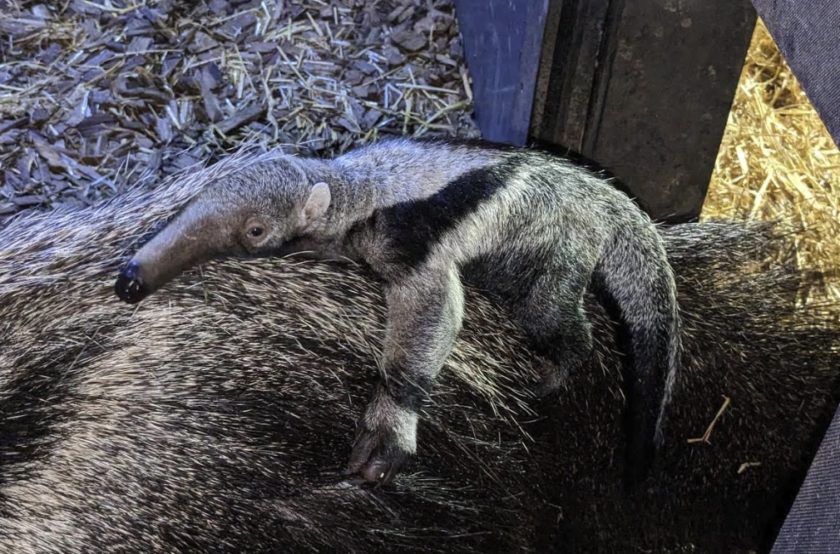
The birth of a baby giant anteater at Chester Zoo has been described as “incredibly positive news” for the shy species.
The yet-to-be-named baby giant anteater is only the third of its kind to be born at the zoo in its 92-year history.
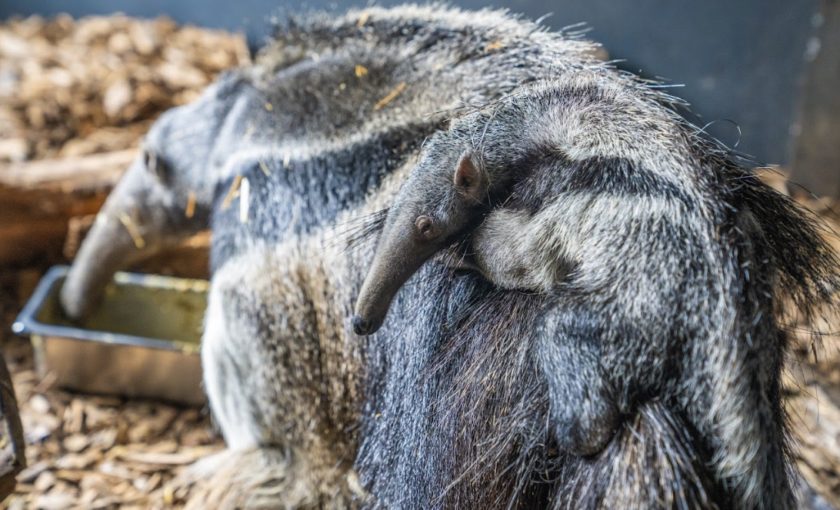
Hidden cameras in the anteater’s den captured the birth, showing the baby born safely onto the ground before climbing onto its mother’s back only moments later.
Giant anteaters are the largest species of anteater in the world and are listed as vulnerable to extinction by the International Union for Conservation of Nature (IUCN) on the IUCN Red List, with numbers continuing to decline in the wild.
Born to Bliss (13) and Oso (nine), the pup is the result of an international conservation breeding programme working to protect endangered and at-risk species.
Experts say the pup will now cling to its mum’s back for around 10 months, where its matching stripe on its fur keeps it camouflaged until it is ready to walk, explore and find food independently.
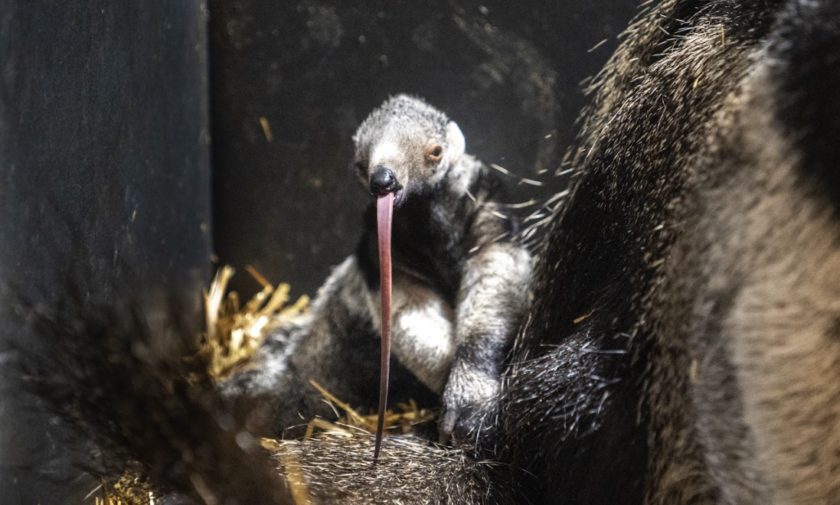
Currently measuring in at around 60cm, giant anteaters can grow up to 2.1m (7 feet) in length.
David White, Team Manager in charge of caring for giant anteaters at the zoo, said: “Mum Bliss is so far doing an excellent job of looking after her new arrival and seeing the baby clinging on tightly to her back is a really special sight.”
“With giant anteaters being vulnerable to extinction, the birth is incredibly positive news for the species. It’s a boost to the safety net population being cared for in conservation zoos like ours, while we’re continuing to learn more about them and, at the same time, create more awareness of the majesty of the species.”
Native to Central and South America, giant anteaters are threatened in both regions, where much of the grassland they depend on to survive has been destroyed, degraded or damaged by fire. In some areas of Brazil, where they once roamed freely, there are now none remaining.
Hidden cameras in the anteater's den captured the birth, showing the baby born safely onto the ground before climbing onto its mother's back only moments later. pic.twitter.com/hER4jBtUrZ
— DEESIDE.com (@DeesideDotCom) April 14, 2023
Research supported by conservationists at the zoo now also points to another major factor in the demise of giant anteaters – road deaths.
Paul Bamford, the zoo’s Field Conservation Manager for South and Central America, said: “Very few long-term studies of giant anteaters have ever been carried out by the global conservation community, meaning it’s challenging to implement effective conservation actions for these unique-looking animals.”
“However, we’re working with our partners in Brazil, the Wild Animal Conservation Institute (ICAS), to carry out vital research to assess the impact of road deaths on giant anteaters over thousands of miles of roads.”
“Such high numbers of collisions with motorists have been recorded that it’s now believed to be one of the main threats to the species after habitat loss.”
Paul added: “GPS collars fitted to giant anteaters are giving us an insight on when and how they cross roads so that hotspots can be identified and strategies can be put in place to help reduce the high numbers of anteaters falling victim to collisions.”
“Camera trap imagery is also helping to provide us with accurate data on population sizes living close to roads. Working together with motorists to understand perceptions and attitudes towards the species is also critical for developing effective protection measures, such as tailored road signs, to minimize collisions and the associated risks to both people and anteaters.”
Check live fuel prices near you before you set off.
Spotted something? Got a story? Email news (@) deeside.com

NEW: Add Deeside.com as a preferred source on Google to see more of our trusted coverage when you search.
Latest News