Casino Entertainment Design in NZ: Gamification & 2026 Compliance
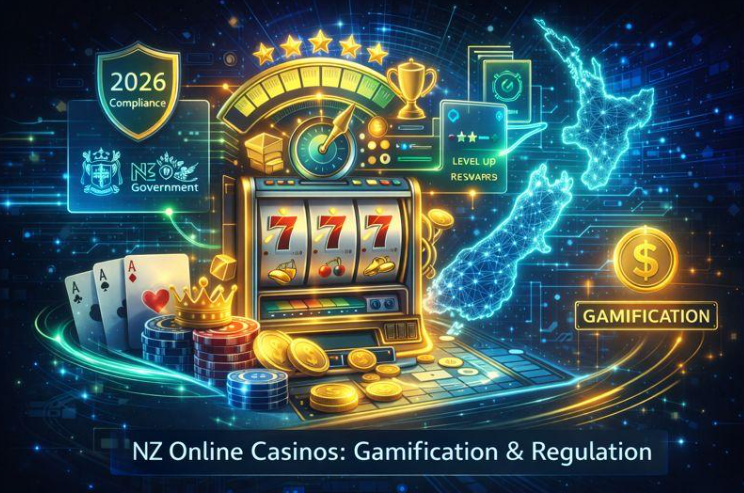
How Online Casino Platforms Use Entertainment Design to Engage Players
The times of winning users with fancy wagering mechanics are gone. As the NZ casino industry is getting more digital-savvy, mobile gaming design dictates greater investment in unique user experience engineering. Functional transactions that limit gamers’ actions to placing bets and evaluating outcomes have evolved into an entertainment-first ecosystem with a process focus. Core features of contemporary markets include game design, streaming culture, and luxury hospitality partnerships, which advance brand recognition and status. High-end igaming platforms prioritise continuity of the user gaming experience, achieved through cinematic visual effects, frictionless onboarding, and infinite personalisation. Gaming-like features, audacious events, tournaments, and vibrant communities turn gambling into a culture rather than an accidental, fragmented activity.
Curated experiences drive market trends and shape strategic industry changes, placing entertainment design at the core of casino operators’ survival. Micro-interactions, variable rewards, social proof, and near-miss feedback are reshaping user-casino relationships. Design standards face increasing scrutiny, with the Department of Internal Affairs developing a new regulatory regime for gambling market entry, advertising standards plus consumer protections. Casinos must adapt to new institutionalised norms to ensure smooth operation in the NZ market. 2026’s legislative and technological outlook informs strategic action in the high-stakes casino industry, informing further steps within the NZ regulatory regime and evolving user demands. Read our guide to see how new entertainment design principles fit into NZ regulation. Learn proper experience architecture lessons to balance stimulation with clarity and ethics.
The Architecture of Immersive Environments in Digital Gaming
User immersion leverages typography, pacing, and user-choice architecture to engineer premium user experiences and sustain attention. Immersive gaming environments capture user attention by integrating visual appeal, sound, micro-interactions, and narratives into a coherent system. In practice, platforms like those featured in a Lucky Nugget casino review demonstrate how cutting-edge software from providers like Microgaming can provide an authentic, theme-driven experience that mimics the energy of a real-world setting. Gaming becomes a continuous process rather than an isolated sequence of actions, fostering a sense of situatedness. Such environments thrive on responsiveness and a sense of presence; players no longer operate games but exist within embedded ecosystems without cognitive friction.
Best online casinos in New Zealand borrow immersion techniques from conventional gaming, which draw players in with layered language and spatial effects. Players stay long with particular games if they like built-in narrative progression and adaptive difficulty mechanics that stimulate engagement without developing boredom. Gaming-like immersion in gambling is less natural, but casinos achieve it through animated transitions, dynamic visual themes, and contextually relevant sound effects. Dynamic visuals, real-time feedback loops, realistic dealer animation, engaging live dealers, and advanced interface personalisation work in tandem to drive users to casino platforms.
Key immersive entertainment targets in gambling are sustained, emotionally rewarding experiences that build sustained engagement. Casinos lack narrative depth but can craft continuous, fluid gameplay with long-term appeal. Immersive tactics turn chance-based play into coherent gameplay, extend session duration, reduce churn, and raise perceived platform value without changing payouts or odds. Gambling platforms reduce user dropout during low-engagement moments by providing entertainment, predictability, and a sense of control. However, some regulators view excessive immersion as psychological manipulation and demand balance and transparency in immersive tactics. To be considered the best online casino New Zealand, operators must avoid predatory practices to maintain a trustworthy reputation, support user retention, and uphold brand legitimacy. High-fidelity immersive gaming experiences demand a robust technical foundation, including web and mobile optimisation, low-latency backend infrastructure, and scalable cloud solutions for peak traffic management.
Psychological Levers: Gamification and the Illusion of Control
Gamification builds on strong psychological foundations to anchor users in casino platform experiences and foster stable, positive associations. The core gamification instrument is an illusion of control, which represents a cognitive bias about the player’s effect on outcomes. Users who develop such a bias neglect the principle of randomness in gambling. They are confident that their choices, skills, or strategies affect odds. The agentic feeling, reading plainly as “my actions affect outcomes,” disguises fixed probabilistic mechanisms of victories and losses in casino gaming. Tools supporting gamification in gambling are:
- Causality-Focused Choice Architecture: Casinos that link choices to causality obscure outcome randomness. Framing bonus feature choices as meaningful amplifies the illusion of control, giving players more incentives to act.
- Choice-Contingent Feedback: Micro-feedback triggered after player choices increases perceived causality, triggering operant conditioning processes in their psyche. Linkage of reward signals with action boosts player engagement and sustains gameplay, sometimes at the expense of players’ financial health.
- Variable Reinforcements: Casinos exploit self-attribution bias, linking wins to individual mastery while linking losses to external factors. Tactics replace perceptions of objective randomness with an illusion of gambling skill.
- Near-Miss Messaging: Near-misses prompt players to try again, showing they almost succeeded. The outcome presentation is manipulative and misleading, disguising the genuine randomness of a yes/no outcome.
- Progress Mechanics with an Emphasis on Mastery: Progress meters and level progression cultivate a sense of mastery in players, detaching them from random outcomes. Perceived-competence-backed control may lead to unrealistic expectations of winning.
- Pattern-Seeking Stimulation: Gamified interfaces never reveal the full mechanics of outcomes, thereby stimulating pattern-seeking in pursuit of control.
To be considered the best online casino New Zealand, an operator should balance immersive gamification with transparency. Player engagement, persistence, and risk tolerance can erode their experience, leading to detachment from reality and irrational expectations that drive reckless choices. New Zealand’s best online casinos develop protective choice architecture with responsible defaults, including mandatory pre-commitment limits, session budgeting settings, and low-friction cashouts. Platforms employ strategic immersion breaks to help players at risk of addiction; reality checks and natural stopping cues work well to interrupt agitated gameplay. Other measures include reduced ‘near-miss’ messaging, cognitive debiasing through plain-language odds and RTP explanations, emphasis on randomness in game information, and the removal of overtly misleading signals that create an illusion of control.
Legal compliance safeguards include robust, visible self-exclusion tools and support pathways, minimising the risk of confusion. Player support enhancements include one-click access, cooling-off modes with easy activation and challenged impulsive reversal, and a human support handoff in escalation cases. Loyalty programmes that foster high-intensity play are increasingly regulated, with transparent reward caps and bans on increasing bonus offers to players who have recently suffered substantial losses. Promotions of loss-triggered offers are prohibited in NZ, preventing aggressive player re-involvement through the promise of additional incentives.
Social Integration and Influencer-Led Communities
What used to be a solitary gaming session has turned into a shared, community-embedded experience. Gambling operators have achieved the effect through social feed integration. Gamers exchange emojis, win notifications, friendly support messages, and game impressions to create social-presence effects and a sense of belonging within the community. Practices transform isolated gambling activities into a community spectacle, stimulated by the rise of influencer-led content production and sharing. Social integrations stabilise engagement and normalise exchanges of reactions and congratulatory messages, embedding gambling into social routines and making it more desirable.
Gambling communities are growing and maturing in NZ, with well-articulated codes of conduct and moderated chat rooms that establish safe, supportive environments. Participants’ narratives affirm the positive, legitimate role of gambling in a player’s life, placing it alongside esports or sports betting. Community feedback helps players interpret losses and wins. As a result, gambling comes to be viewed not as a risky waste of time and money but as a socially meaningful activity.
Cinematic IP and Visual Storytelling in Gaming Software
Contemporary gambling software is unthinkable without high-resolution cinematic integrations. Casino platforms borrow TV and film tactics to boost user engagement and create realistic, emotional experiences beyond game mechanics. Cinematic themes are trending in NZ casino online games today, with widescreen resolution and celebrity characters driving user interest. Many slots use a cinema-style plot progression to keep players hooked, with a resolution possible by completing specific milestones. Players are invited to author their narratives instead of following static reel-spinning rules. Together with dramatic visuals, lighting, and sound effects, storytelling tactics work similarly to screen media in creating strong emotional associations with gambling. Cinematic borrowings enable new degrees of visual storytelling, which boosts emotional attachment with experiential continuity.
Even free slot games NZ utilise storytelling to heighten tension, manipulate episodic pacing, and offer spaced visual payoffs to anchor players. Presenting bonus rounds as narrative climaxes amplifies their emotional impact, creating a sense of progression that is unattainable in random-outcome gameplay. Cinema-like design tools prolong gaming sessions with a richer, more intense gameplay experience. They help casino operators boost players’ chances of winning without affecting the slot’s math or increasing payouts. Free gaming serves anchoring goals even better, with the absence of financial risk pushing players to explore immersive narratives. They urge players to develop emotional connections with thematically immersive games to achieve long-term engagement.
Manager’s Review: High-Engagement Design Features
User engagement stems from the technical architecture designed to achieve it. NZ casino design decisions balance regulation, competition, plus platform-specific capacity. At the technical level, casinos employ entertainment design using well-known elements:
- Dynamic Reward Systems: Casino interfaces thrive on progress-driven mechanics. Players enjoy a visualised experience via bars, tiers, milestone completion badges, and achievement rewards. Techniques enhance and customise the user experience without deviating from standard casino math. Their psychological effect is linked to perceived mastery in chance-driven game environments, giving players enjoyment of momentum as gaming reinforcement. NZ laws require clear, non-deceptive dynamic reward messaging to ensure transparency.
- Low-Latency Streaming: Live dealer gaming used to be a premium feature available in select casinos. Today, it’s the new normal in NZ gambling, requiring low-latency streaming capacity on mobile and web platforms. Technically, such infrastructure must have low-latency streaming pipelines and high-bandwidth video streaming functions. Geographic server dispersal boosts streaming speed to prevent immersion breaks and trust issues.
- NZD-Native Pricing: Casinos serving NZ players must integrate NZD-first pricing for local website or app versions. Stakes, rewards, limits, plus progress milestones displayed in NZD reduce player friction and prevent confusion. As noted in recent industry analysis, the way local currency support shapes online casino adoption in New Zealand is a critical factor in building long-term player trust and financial transparency. Currency conversions risk distorting perceived value or distracting players from gameplay. To avoid such barriers, NZD-facing casinos introduce currency-locked wallets plus automated conversion logic into the entire monetary model of website use. Measures meet compliance targets while providing players with psychological comfort.
Technical Compliance of Casino Engagement Solutions
Casinos’ technical compliance layer is critical in the evolving NZ regulatory landscape. Operators must demonstrate a commitment to superior user protection and to the financial traceability demands of regulators. Their ability to guarantee verifiable randomness plus exhibit measurable performance sets new standards for mobile/web casino design. However, maintaining these standards while staying competitive is difficult due to unique SEO challenges in the New Zealand iGaming market, where visibility depends on balancing technical speed with strict advertising rules.
Minimal transaction security standards include AML/CFT obligations for NZ/international casino operators, coupled with system-wide timestamping for network communications. Cryptographic integrity, RNG assurance mechanisms, and mobile latency shape a casino’s trustworthiness and determine its survival in the NZ market. This emphasis on technical ethics mirrors broader discussions in the tech world; for instance, MIT Technology Review frequently highlights how algorithmic transparency is becoming the new baseline for consumer trust in digital ecosystems. The table below summarises the must-have technical standards that translate into regulatory compliance proof.
| Component | Technical Specification | Regulatory Significance |
| Transaction Ledger | Native NZD / Domestic Rails | Eliminates FX Friction & Transparency |
| Data Encryption | AES-256 / TLS 1.3 | Ensures Compliance with Privacy Act 2020 |
| Game Logic Audit | Independent RNG Certification | Guarantees Mathematical Fairness |
| Mobile Latency | Edge Computing / 5G Optimised | Required for High Mobile Penetration |
| User Verification | Digital ID / MFA Integration | Mandatory KYC/AML Infrastructure |
Technical Compliance vs. Engaging Design: The 2026 Outlook
Compliance at the core game design level is the new regulatory pressure in New Zealand. Pursuant to the 2026 regulatory changes by the Department of Internal Affairs (DIA), risk minimisation tools are no longer auxiliary to core mechanics. Before DIA changes, compliance mechanisms were viewed as supplementary to game design, with pop-up reminders or external menus used for responsible gambling. Some casinos used post-session disclosures to remind players of gambling addiction risks and recommend remedial action for emotional, impulsive gaming decisions. Starting in 2026, responsive gambling shifts from a layered solution to an ecosystem element embedded in the casino architecture and design of casino games NZ. Mandatory reality checks, spend visibility, plus session time disclosures must accompany gameplay processes without eroding user experience. Changes are expected to enrich or regulate user sessions while maintaining the perceived entertainment value stable. Casino platforms must solve technical consistency puzzles to meet new compliance goals without distracting users with deliberate interruptions. While immersive design thrives on flow, regulatory measures require interruption of immersive gameplay to restore real-world awareness and stimulate unbiased self-assessment. After that, players must be effectively re-anchored without psychological manipulation or unethical engagement tactics. One workable option is to treat compliance-targeting interruptions as carefully designed gaming moments. Casinos experiment with pausing between rounds, cinematic inserts featuring session data summaries, or UI overlays consistent with the games’ visual language. Such measures may mute the intensity of disruptions without turning them into immersion breaks.
Behavioural Ethics & the Future of Digital Accountability
The NZ government’s new moves towards a safe, fair, and controlled online gambling industry come with far-reaching repercussions for existing operators. Its primary target is persuasive gambling design, with manipulative tactics undermining the behavioural ethics of gaming. Regulators focus on socio-economic risks of behaviourally unethical platforms, which target addicted players and deepen their debts. This aligns with global concerns reported by The Guardian, which has extensively documented how “dark patterns” in digital design can lead to avoidable financial stress and harm to vulnerable population categories.
Gamers with impaired self-control exhibit reduced household spending patterns, lose workplace productivity, and abandon health and social service use. Trends harm New Zealand’s economy and require effective regulatory mechanisms to protect both the economy and individual households. One such economic measure to counterweigh gambling harms in NZ is the proposed 1.24% problem gambling levy. A mandatory deduction from casino profits is allocated to harm prevention and treatment programmes, introducing responsibility-sharing mechanisms for problem gambling. The change links casino profitability to social costs, obliging casino operators to finance remedial action for the harm of their addictive design solutions.
Regulatory Outlook: Licensing and the 16% Community Duty
A legal change is the transition to a 16% Online (Offshore) gambling Duty, which represents a 4% increase in the allocation to community funding. The regime starts on January 1, 2027, giving casino operators one year to prepare for the change. Every best online casino for NZ players must undergo tax-compliant transitioning to invest in domestic community infrastructure, such as harm minimisation services and regulatory cost recovery. The gambling duty affects pricing, loyalty economics, plus user acquisition costs, resembling a social license mechanism in the NZ market. To be regarded as the best online casino in NZ, gambling operators must be prepared to reallocate a portion of gross gambling revenue to socially meaningful causes. In return, they may expect lower political risk and stable long-term operations in New Zealand.
Today’s gambling industry in NZ is undergoing a large-scale shift from entertainment-based user-conversion tactics toward regulated service standards for immersive, entertaining design solutions. Casinos face renewed regulatory scrutiny, with financial pressures driving both users and operators away from the market. The new reality for the gambling business setup demands new models of user relationships, with financial anchors losing relevance amid growing competition. Immersive, entertaining elements shape casino popularity and drive demand, giving gambling platforms new ways to boost user engagement beyond payout promises. Advanced immersive technologies and features create high-fidelity user experiences, building a new, socially endorsed ecosystem for gambling activities. However, the 2026 regulatory changes in NZ dictate new pathways for balancing engagement with compliance. Domestic regulatory standards determine what casinos can do to attract users, with overt bans on manipulative psychological tactics. Therefore, casino success in 2026-2027 is driven by a combination of immersive user experiences and compliance throughout technical and user-facing casino infrastructure.
Check live fuel prices near you before you set off.
Spotted something? Got a story? Email news (@) deeside.com

NEW: Add Deeside.com as a preferred source on Google to see more of our trusted coverage when you search.
Latest News