Hawarden Bridge: listed building consent granted for Pier 7 repairs
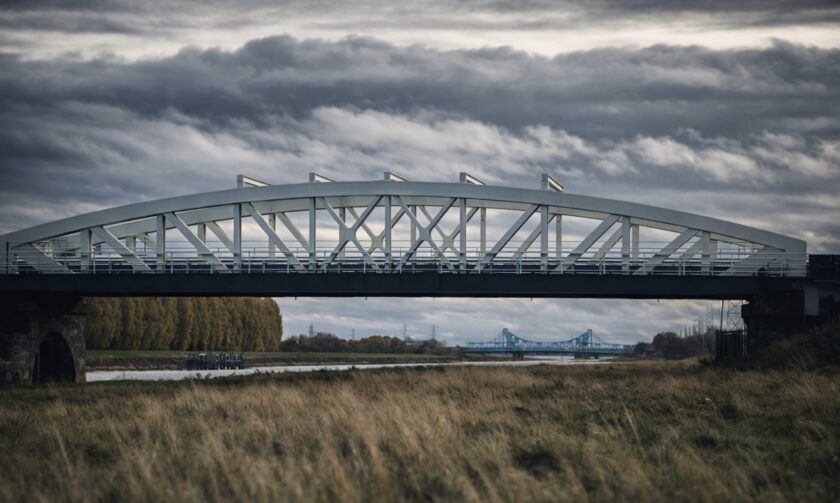
Network Rail can now repair a leaning pier on the Grade II listed Hawarden Bridge after Flintshire County Council approved its application for listed building consent.
The decision clears the way for structural repair work to Pier 7, one of seven masonry arch spans on the bridge’s south-western approach across the River Dee flood plain.
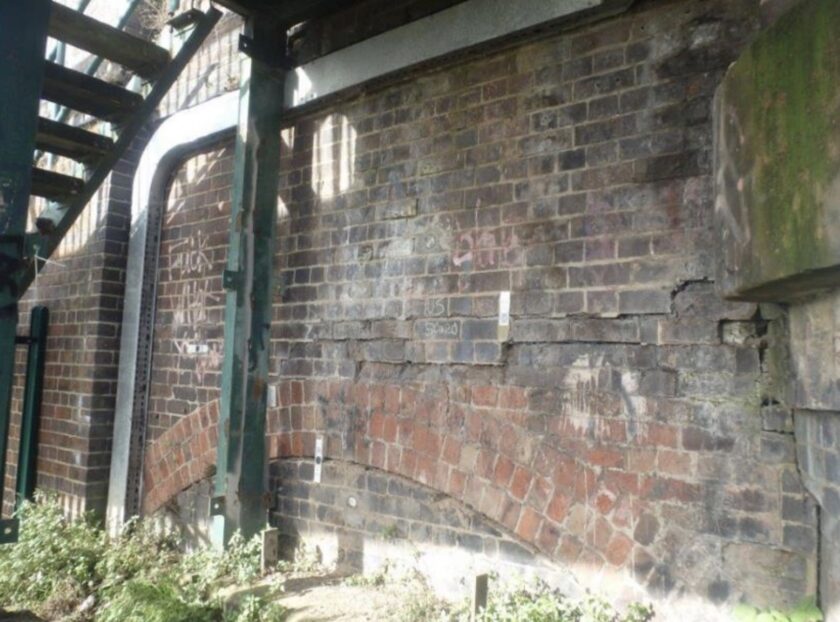
Engineers had recorded continuing movement at the pier, with the retaining walls leaning further over time and the downside wall settling relative to the rest of the structure.
Defects documented in the application included a bulging and cracked spandrel wall, a ballast wall split into two pieces, a full-height vertical crack through the retaining wall on the opposite side, and a missing section of parapet.
Network Rail’s application stated that without intervention, continued movement and water ingress would accelerate the deterioration and lead to more extensive and more intrusive work later.
The approved scheme will see the material beneath the track excavated and replaced with a lightweight fill called Porofoam, reducing pressure on the walls.
Metal fixing plates known as ductile pattress plates will be bolted through the masonry to tie the walls together, with reinforcement bars installed internally, drainage added, and brickwork repairs and repointing carried out throughout the affected area.
Missing parapet sections will be rebuilt using salvaged original stonework where possible, and modern palisade fencing along with two metal stairways added in more recent decades will be removed.
Two alternative approaches were considered and rejected before the chosen scheme was settled on, both ruled out because of the visual impact they would have had on the historic fabric of the bridge.
The council’s Built Conservation team supported the application without objection.
In its written response, Built Conservation said the scheme would result in “some modification to the original structure” but described the application as comprehensive and added that the team was “fully supportive of the proposal.”
Two requests from Built Conservation were addressed in the approval.
All new copings installed during the works must be dressed sandstone to match the existing copings, set as a formal condition.
An advisory note has been added requiring graffiti adjacent to the works to be carefully cleaned off and the area made good.
Heneb: Clwyd Powys Archaeology said there were no obvious archaeological implications.
Historic Buildings and Places offered no comments and deferred to the council’s specialist conservation team.
The Royal Commission on the Ancient and Historical Monuments of Wales, the Society for the Protection of Ancient Buildings, the Georgian Group and the Victorian Society did not respond to the consultation.
Hawarden Bridge was built between 1887 and 1889 by engineer Francis Fox for the Chester and Connah’s Quay Railway, and is Grade II listed under two separate designations recorded on 18 May 2005.
The bridge’s central swing span, which could historically open within around 40 seconds to allow vessels through on the River Dee, has since been welded shut.
It carries the railway line linking north Wales with the Wirral and north-west England.
The works must commence within five years of the decision date.
Check live fuel prices near you before you set off.
Spotted something? Got a story? Email news (@) deeside.com

NEW: Add Deeside.com as a preferred source on Google to see more of our trusted coverage when you search.
Latest News