Shoplifting in Flintshire rose 16% last year as offences fell across Wales
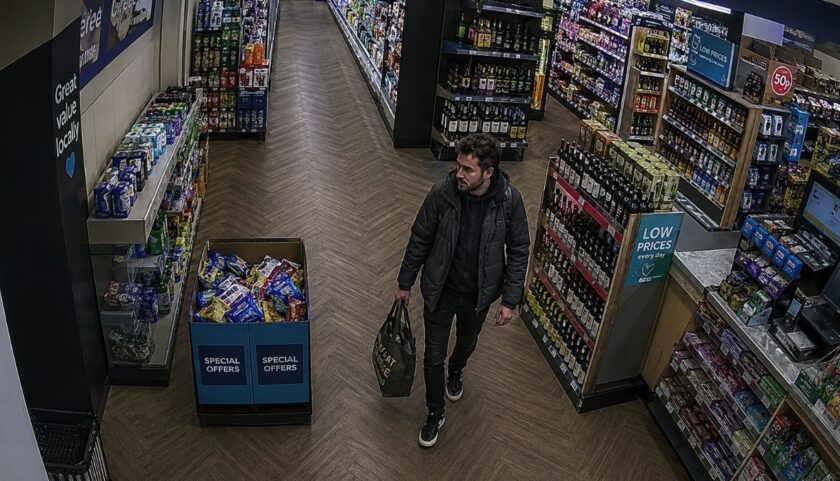
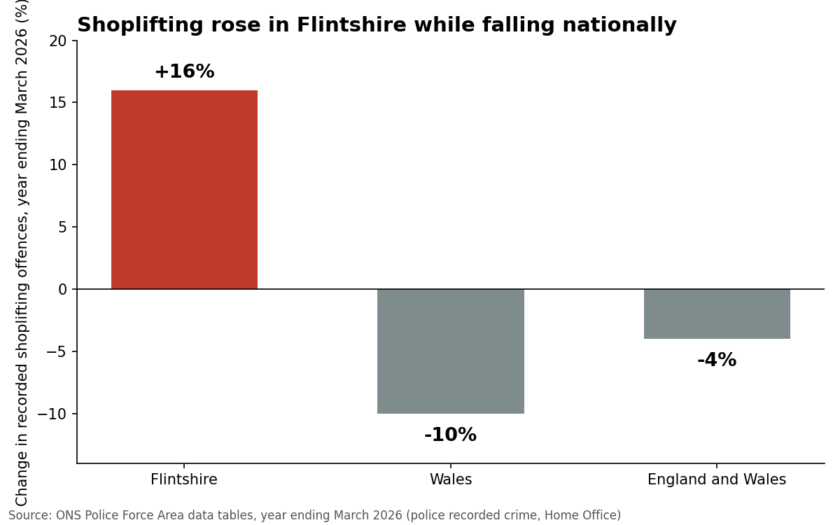
Shoplifting recorded in Flintshire rose by 16% last year, even as it fell across Wales and England, new figures show.
North Wales Police recorded 1,054 shoplifting offences in the county in the year to March 2026, up from 909 the year before, according to Office for National Statistics (ONS) data published today.
Across Wales shoplifting fell by 10% over the same period, and across England and Wales it fell by 4% after several years of rises.
The Flintshire figure works out at around 20 shoplifting offences a week.
The ONS notes that rises in recorded shoplifting can partly reflect retailers reporting more incidents to police, with forces actively encouraging shops to report thefts and submit CCTV evidence.
Responding to the figures, North Wales Police and Crime Commissioner Andy Dunbobbin said:
“The figures from the Office for National Statistics present a mixed picture, but it’s important to consider the fuller context behind the raw numbers. The increase in shoplifting offences recorded in Flintshire is interesting to note, particularly as it runs contrary to the wider national trend. Having visited Flint, Mold, Buckley, Broughton Park and other centres across the county in recent times to speak to retailers and residents, I know that shoplifting has a significant impact on local businesses, retail staff and communities. I am confident that North Wales Police continues to work closely with retailers, local businesses and partner agencies to identify prolific offenders, improve reporting and take action against those responsible. I support that approach and want businesses to have confidence that reports of shop theft will be taken seriously and investigated.”
Overall recorded crime in the county also moved against the national trend.
There were 9,893 offences recorded in Flintshire in the year to March, excluding fraud, a rise of 1.5% on the previous year’s 9,746.
Recorded crime fell by 1.3% across the North Wales Police force area over the same period, by 2.6% across Wales, and by 1.4% across England and Wales.
Flintshire remains a lower-crime area than most, with around 63 offences recorded per 1,000 people, compared with around 85 across England and Wales.
Within the county’s figures, violence causing injury fell by 17% to 945 offences, while violence without injury rose by 15% to 1,795.
Recorded drug offences in Flintshire doubled in a year, from 174 to 348.
The ONS cautions that recorded drug offences largely reflect police activity, so a rise can mean more enforcement, such as stop and search or warrants, rather than more drug use.
Across the North Wales force area, recorded drug offences rose by 39%.
Mr Dunbobbin said: “The rise in recorded drug offences should also be viewed in context. As the Office for National Statistics acknowledges, drug crime figures can be a reflection of proactive police activity rather than levels of offending. In many cases, an increase in recorded offences can indicate that officers are undertaking more targeted action against those involved in the supply and use of illegal drugs and I know that tackling drug-related crime remains a key priority for the Force.”
Knife crime
North Wales Police recorded 268 offences involving a knife or sharp instrument in the year to March, down 21% from 339 the year before, a much larger fall than the 8% recorded across England and Wales.
The rate in North Wales, 38 offences per 100,000 people, is less than half the England and Wales figure of 79.
No knife-related homicides were recorded in North Wales during the year.
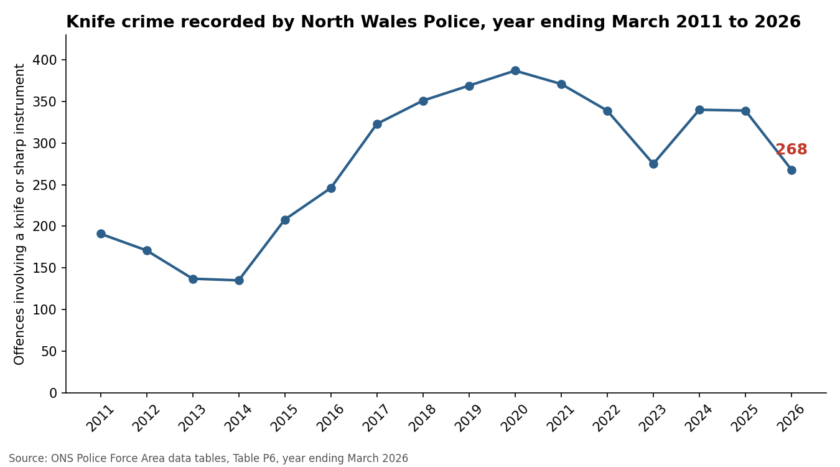
Mr Dunbobbin said: “It is also encouraging to see a significant reduction in knife crime across North Wales. Every offence prevented represents a potential victim saved and news of a 21% fall is welcome. Thankfully, North Wales continues to have one of the lowest rates of knife crime in England and Wales, reflecting the ongoing work of North Wales Police, schools, community organisations and local partners, including services that I help fund as Police and Crime Commissioner.”
The figures are based on crimes reported to and recorded by police, and the ONS notes they do not capture offences that go unreported.
The ONS publishes recorded crime figures for police force and local authority areas every three months, with the next release due in October.
Mr Dunbobbin added: “The overall picture shows that North Wales remains one of the safest places in the United Kingdom and I will continue to hold the Chief Constable to account to ensure resources are focused on the issues that matter most to residents, including retail crime, drug-related offending and serious violence, while supporting investment in prevention and neighbourhood policing.”
Check live fuel prices near you before you set off.
Spotted something? Got a story? Email news (@) deeside.com

NEW: Add Deeside.com as a preferred source on Google to see more of our trusted coverage when you search.
Latest News