Senedd committee ‘alarmed’ by cancer care delays as 62-day target missed
A Senedd committee has said it is “alarmed” by ongoing failures in cancer services in Wales and has warned that progress has been too slow.
In a new report published on Friday, the Public Accounts and Public Administration Committee said performance remains unacceptable, with too many patients waiting too long for diagnosis and treatment.
The inquiry follows concerns previously raised by Audit Wales and examines performance, outcomes, leadership, prevention, digital systems and data across NHS cancer services.
At the centre of the criticism is the continued failure to meet the 62-day cancer treatment target.
The Welsh Government’s standard requires 75 per cent of patients to start treatment within 62 days of cancer first being suspected.
The latest figures show just 58 per cent met that target in November 2025.
Performance has remained between 52 and 64 per cent since 2020.
An earlier ambition to raise the target to 80 per cent by March 2026 has now been dropped following advice that it was not realistically achievable.
Committee chair Mark Isherwood said members were concerned by what they heard during evidence sessions.
“We were alarmed by the problems identified and remain concerned about the pace at which changes are being delivered,” he said.
“Whilst the Welsh Government’s headline target of 80 per cent of cancer patients starting treatment within 62 days is admirable, it may not be realistic.”
The committee heard evidence from patient groups about people chasing test results and appointments, and about the stress caused by long waits.
It also found that delays between diagnosis and the start of treatment have increased in recent years.
Members say relying on a single 62-day measure does not give a full picture of how services are performing.
They are calling for more detailed data to be published, including breakdowns by tumour type and region.
The report also highlights inequality in cancer outcomes.
Five-year survival stands at 69 per cent in the most affluent areas of Wales, compared with 51 per cent in the most deprived communities.
Mr Isherwood said the gap was deeply concerning.
“We are particularly concerned by the significantly less favourable outcomes for patients from deprived backgrounds,” he said.
The committee is urging the Welsh Government to strengthen targeted screening efforts and improve data collection so inequalities can be properly measured and addressed.
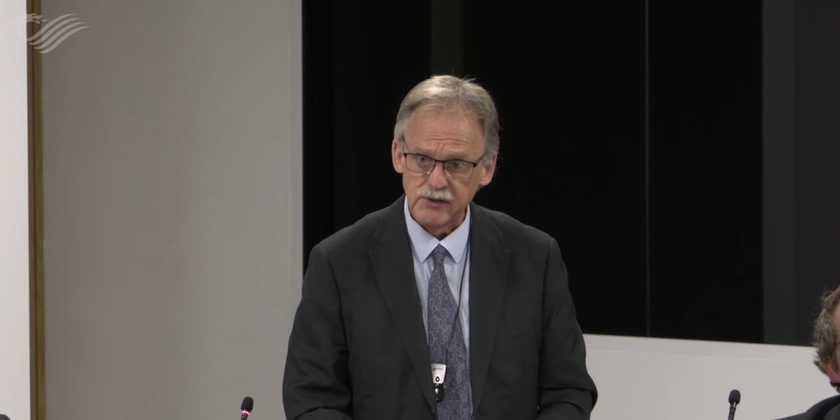
[North Wales MS Mark Isherwood, Public Accounts and Public Administration Committee chair]
Lung cancer remains the biggest cause of cancer deaths in Wales.
Nearly half of patients are diagnosed at stage four, when survival rates are much lower.
The report calls for the rollout of a national lung screening programme to be brought forward.
On leadership, the committee says there has been confusion about who is responsible for driving improvement between the Welsh Government, NHS Wales and Public Health Wales.
Members say roles need to be clarified and accountability strengthened.
They have asked for a formal update on how new governance arrangements will reduce variation between health boards.
One of the main recommendations is the development of a long-term cancer strategy lasting at least 10 years.
The committee says short-term improvement plans are not enough and that Wales needs a fully funded strategy with measurable outcomes and a national workforce plan.
Despite increased spending on cancer services in recent years, workforce shortages remain a problem.
The report points to gaps in radiology, oncology and clinical coding, all of which affect diagnosis and reporting.
Digital systems are also criticised, with the committee hearing that fragmented IT systems mean staff still rely on manual workarounds to transfer patient information.
It says upgrades to cancer informatics systems must be accelerated and that digital systems should allow better regional working and shared waiting lists.
Concerns were also raised about weaknesses in cancer data.
Large gaps remain in ethnicity recording and tumour-specific reporting.
Wales continues to lag behind England in publishing some cancer statistics.
Members say that without accurate and timely data, it is difficult to judge performance properly or tackle inequality effectively.
On prevention, the report notes that 38 per cent of cancers in Wales are considered preventable.
While work on tobacco control and obesity was acknowledged, the committee says there is no clear overarching prevention strategy and more must be done to address alcohol-related cancer risk.
The Welsh Government has accepted most of the recommendations made by the Auditor General and has established a new National Cancer Leadership Board.
However, the committee says stronger action is needed across the system.
For patients and families facing a cancer diagnosis, members say improvements cannot come soon enough.
Check live fuel prices near you before you set off.
Spotted something? Got a story? Email news (@) deeside.com

NEW: Add Deeside.com as a preferred source on Google to see more of our trusted coverage when you search.
Latest News