More must be done to protect Welsh rivers from drought, says charity
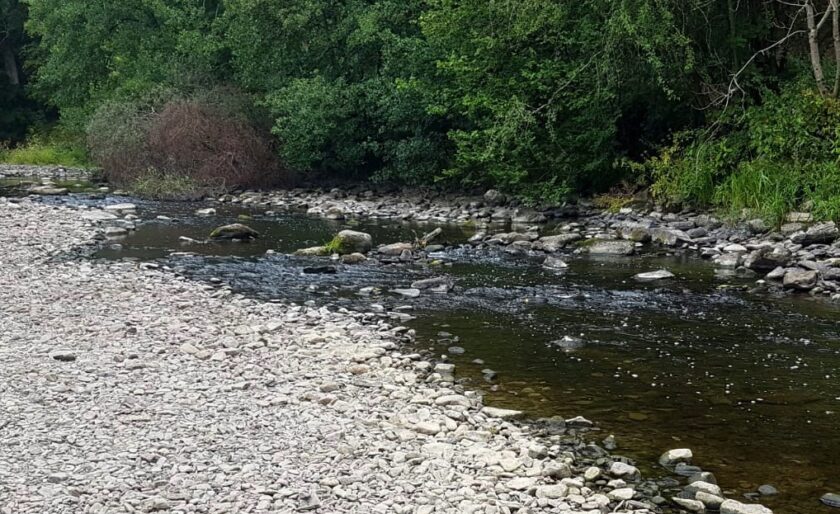
Wales must do more to protect its rivers from drought, according to Afonydd Cymru, the charity representing the country’s six regional rivers trusts.
The warning comes as rivers across Wales run low following weeks without significant rain, with some already below recent lowest levels or approaching all-time lows.
Afonydd Cymru said fish deaths had been reported in some Welsh rivers during the latest heatwave, with low flows raising water temperatures to levels particularly dangerous for salmon and other salmonid species.
No areas of the UK are currently in official drought status, although parts of England are on a watchlist following this summer’s high temperatures.
Wales’s drought group met this week to assess the situation, with more dry weather forecast for the rest of July.
Afonydd Cymru said the situation should be understood as an environmental drought rather than a water resources drought, meaning rivers and ecosystems are under strain even though supplies for households and businesses remain healthy.
Reservoirs across the four Welsh Water regions were between 82 and 91 per cent full at the start of July, the charity said, while Hafren Dyfrdwy’s storage stood at around 69 per cent.
Ofwat has urged people to reduce their water use to ease pressure on rivers, with per capita consumption in Wales averaging around 150 litres a day, compared with 136 litres in England.
Afonydd Cymru said that message would carry more weight if water companies addressed their own leakage records.
The charity said Welsh Water had missed its leakage reduction targets for the past three years, and had previously been found to have misreported its leakage rates, while Hafren Dyfrdwy had generally met its targets despite still losing tens of millions of litres of water a day.
Afonydd Cymru also raised concerns over water abstraction from rivers for uses beyond domestic supply.
Abstraction in Wales is regulated by Natural Resources Wales under the Water Resources Act 1991, with a licence required for any abstraction of more than 20 cubic metres a day.
Afonydd Cymru said Natural Resources Wales’s checks on water resource licences in 2024 found a non-compliance rate of 37 per cent.
According to the charity, Natural Resources Wales issued 2,008 water resources licences in 2024, and carried out 190 compliance assessments, of which 120, or 63 per cent, were found to be compliant.
Afonydd Cymru said it was unclear whether any enforcement action had followed the cases of non-compliance.
The charity said reservoirs across Wales could be used more proactively to support river ecology during low flows, with the Dee and the Wye among rivers currently receiving extra releases for that purpose.
Afonydd Cymru said Natural Resources Wales had statutory obligations to protect designated species and habitats, and that the regulator had so far failed to implement wider reservoir release schemes that could better protect other rivers.
The charity said work to restore peat bogs, improve soil health and increase tree cover would help build resilience to both flooding and drought, noting that Wales’s six regional rivers trusts planted more than 31,000 trees last year.
Afonydd Cymru said there was currently no joined-up national plan covering water resources, infrastructure, growth and food security, and called on the Welsh Government to develop one.
Check live fuel prices near you before you set off.
Spotted something? Got a story? Email news (@) deeside.com

NEW: Add Deeside.com as a preferred source on Google to see more of our trusted coverage when you search.
Latest News