Light, Scale, and Drama: The Architectural Impact of Large Chandeliers
A Statement Beyond Illumination
In architecture and interior design, lighting often serves as more than a practical necessity—it becomes a defining element of the space. Nowhere is this more apparent than in the presence of large chandeliers. Far from being purely decorative, these striking installations influence scale, guide movement, and set the tone of an entire room. Their size alone demands attention, but it is their integration into the spatial composition that truly shapes the atmosphere.
Defining Scale in Grand Interiors
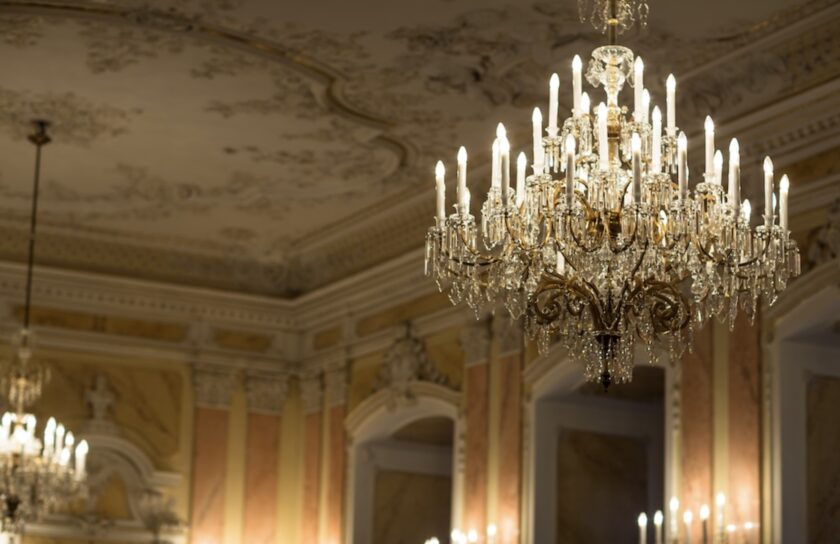
Scale is a central consideration in architecture, and lighting can either reinforce or disrupt it. Large chandeliers have the unique ability to anchor expansive spaces—ballrooms, hotel lobbies, grand staircases—providing a focal point that brings proportional harmony. In rooms with soaring ceilings, they create a sense of intimacy by visually lowering the height, while in elongated spaces, they draw the eye upward and enhance the perception of grandeur.
Creating Drama Through Light and Shadow
Drama in design is not solely about size; it is about contrast, movement, and experience. A well-designed chandelier disperses light in layered ways – casting shadows that shift throughout the day and refracting light into subtle patterns across walls and ceilings. The effect can transform a static space into one that feels alive, engaging both the eye and the imagination. This dynamic quality is amplified in crystal designs, where each facet acts as a miniature prism, scattering illumination in unexpected directions.
Architectural Integration and Material Dialogue
When introduced into a space, large chandeliers become part of its architectural language. Their form, materials, and placement interact with structural elements such as columns, cornices, or open beams. A contemporary steel-and-glass atrium might call for a minimalist metal frame with exposed bulbs, while a heritage building may embrace ornate crystal or wrought iron. The success lies in ensuring that the chandelier does not feel like an afterthought, but rather a natural extension of the space’s character.
The Emotional Impact of Scale
Beyond technical and aesthetic considerations, large chandeliers carry a psychological weight. They create moments of awe, turning the simple act of entering a room into an experience. In hospitality settings, they can become landmarks that guests remember long after their visit. In private residences, they mark significant spaces—dining rooms where celebrations unfold, entrance halls where first impressions are made. This emotional resonance is what transforms lighting from a functional element into a lasting memory.
Beyond Tradition: Expanding the Role of Large Chandeliers
While historically associated with opulence and formality, large chandeliers are increasingly reimagined for modern contexts. In minimalist interiors, they can serve as the singular sculptural element that breaks clean lines with deliberate boldness. In industrial conversions, they bring a sense of refinement that offsets raw textures. Their adaptability ensures that, regardless of setting, they continue to be more than just a light source—they are an architectural gesture, a balance of light, scale, and drama that defines the space they inhabit.
Photo source: lightfoot / Adobestock.com
Check live fuel prices near you before you set off.
Spotted something? Got a story? Email news (@) deeside.com

NEW: Add Deeside.com as a preferred source on Google to see more of our trusted coverage when you search.
Latest News