Life-saving CPR skills to feature in driving exam
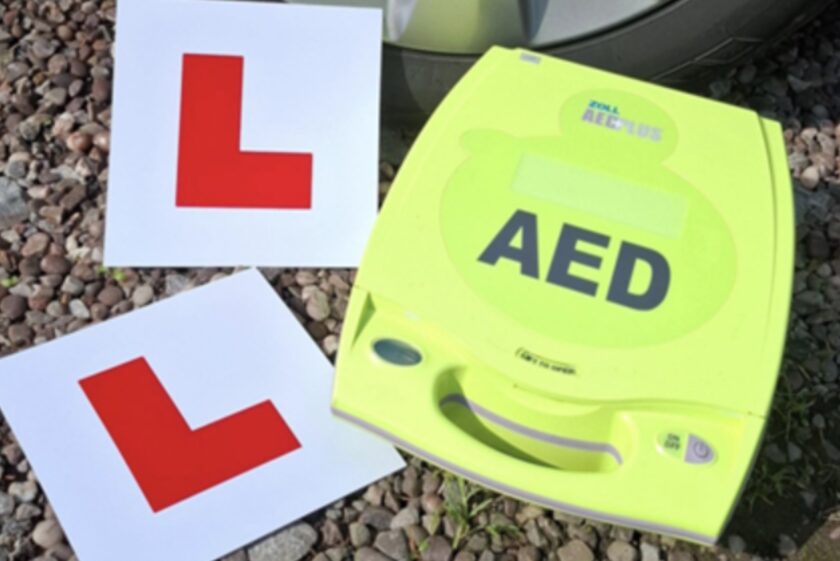
Learner drivers will soon face questions on cardiopulmonary resuscitation (CPR) and how to use defibrillators in the UK driving theory test.
The Driver and Vehicle Standards Agency says the change will be introduced to car and motorcycle theory tests in early 2026, as part of a partnership with national programmes including Save a Life Cymru, Save a Life Scotland, Save a Life Northern Ireland and Resuscitation Council UK.
DVSA says it wants to encourage all road users to learn basic CPR and defibrillator skills, pointing out that drivers are often first on the scene when someone suffers a cardiac arrest.
Around 2.4 million people take the theory test each year, and DVSA says adding CPR content to official learning materials will mean more drivers are equipped to act in an emergency.
In the UK, more than 40,000 people suffer an out-of-hospital cardiac arrest each year, with fewer than one in ten surviving. If CPR is given and a defibrillator used within three to five minutes of collapse, survival rates can be as high as 70 per cent.
DVSA Chief Driving Examiner Mark Winn said: “Part of being a safe and responsible driver is knowing what to do in an emergency – how to step in and make a real, life-saving difference.
“Learning CPR and how to use a defibrillator is a very simple skill and adding this into the official learning resource is a great way for DVSA to support the drive to raise awareness.”
The change was championed by Save a Life Cymru Chair Professor Len Nokes, whose 24-year-old daughter Claire died in 2017 from complications following a cardiac arrest. He said: “When Claire, my daughter, had her cardiac arrest, some knowledge of CPR might have made a difference.
“I don’t want any other family to go through this experience. All of us in this partnership hope that by making CPR and how to use a defibrillator part of the theory test, we will be able to significantly increase the number of people who have this life saving awareness.”
Resuscitation Council UK chief executive James Cant said: “By embedding these life-saving skills into such a widely taken assessment, we can help ensure that more people, from all communities, gain the knowledge and confidence to act during a cardiac arrest.”
Independent road safety campaigner Meera Naran MBE said: “Raising awareness of this vital, life-saving skill could increase the chance of survival not only in the immediate aftermath of a road crash, but also in our everyday lives.”
In Wales, between April 2024 and March 2025 there were 3,120 out-of-hospital cardiac arrest cases resulting in a resuscitation attempt. Of these, 620 patients – 19.8 per cent – arrived at hospital with a return of spontaneous circulation.
Check live fuel prices near you before you set off.
Spotted something? Got a story? Email news (@) deeside.com

NEW: Add Deeside.com as a preferred source on Google to see more of our trusted coverage when you search.
Latest News