Chester Zoo’s baby doves are a world first hope
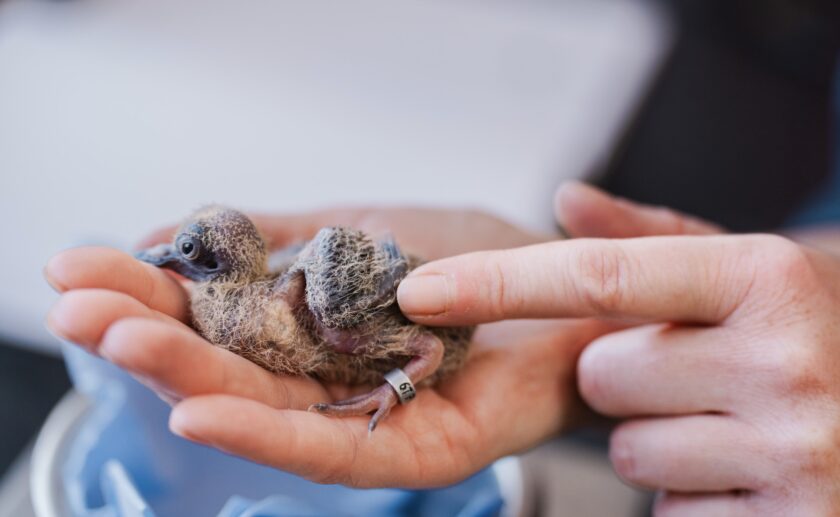
Eight chicks belonging to a dove species that has been extinct in the wild for decades have successfully hatched at Chester Zoo.
Socorro doves are one of only five bird species listed as extinct in the wild but still surviving in human care.
Today, all remaining birds are cared for in conservation-breeding programmes across Europe and North America.
Approximately 200 Socorro doves exist worldwide, but eight new chicks, known as squabs, have hatched at Chester Zoo this summer.
Some are already fully fledged and keepers say there could be more eggs on the way.
Chester Zoo, a conservation charity, looks after two breeding pairs of Socorro doves and plays a key role in the international recovery effort.
Andrew Owen, head of birds at Chester Zoo, said: “Historically, the Socorro dove had few natural predators, and the island remained uninhabited by people. Sheep introduced in the 1800s caused extensive damage to the wild vegetation and in 1957 a naval base was established on the island. Naval staff and their families brought domestic cats which became feral and caused tremendous damage to the native wildlife, including the Socorro dove population, which was last seen in the wild in 1972.
“Sadly, the Socorro dove was overlooked by conservationists for many years and if it wasn’t for the efforts of a group of German aviculturists, who created a breeding programme for the species, it would have been lost forever. In 1995, the Socorro dove conservation breeding programme was formally established when the European Association of Zoos and Aquaria (EAZA) approved it as a European Endangered Species Programme (EEP).”
The chicks at Chester Zoo are part of an insurance population of birds maintained by avian specialists.
Clare Rafe, the assistant team manager for birds, said: “It (the hatching) is a big deal. We have several chicks which have successfully reached independence, and the others are on the verge of being fledged.”
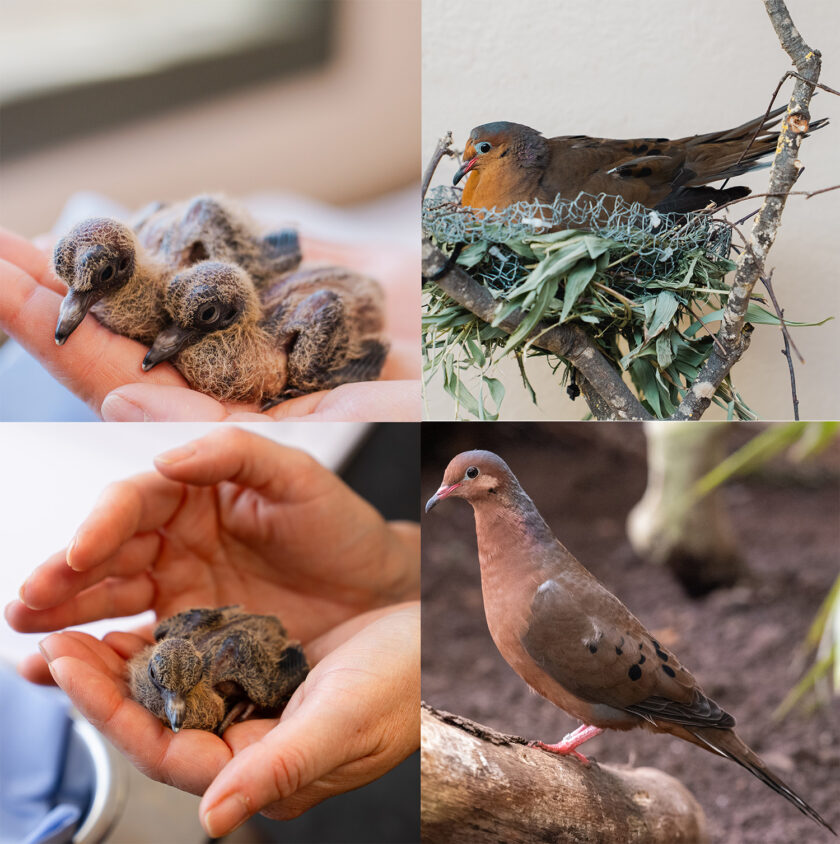
Socorro doves have unusual breeding behaviours, with both parents taking turns in raising their chicks.
Clare said: “It’s a 50-50 arrangement most of the time, but we have found the females will raise their chicks up to a point and then become ready to mate again, so they’ll start raising a new clutch of eggs before the first have fledged.
“It’s very intense for them, but it’s a way of increasing their numbers rapidly – which they need to do to survive. In the wild, they would only have perhaps a two or three-month nesting window between storms and heat waves.
“When that happens, the fathers take over with the older chicks, feeding them and caring for them. The males can be quite territorial and aggressive, which makes pairing them tricky, but we’ve found one of them has transferred that into protectiveness for his chicks.”
Andrew added: “For many years, the Zenaida graysoni population has been managed by Steffan Stadler, Bird Curator from Frankfurt Zoo, who championed the species and led on developing a holistic plan to return the species to the wild. The Zoological Society of London (ZSL) have extinct species plans that incorporates the Socorro dove and they work closely with Africam Safari, a park in Mexico, to move towards wild reintroductions.
“Without the valuable work zoos do, these species would be lost forever. Our role at Chester Zoo is helping to maintain the insurance population and hopefully, at some point our birds will support the work done by ZSL and Frankfurt, and their descendants will see Socorro Island.”
Clare added: “We’ll keep looking after these amazing birds. They might look quite plain and brown from a distance, but they have what looks like shimmery blusher on their heads. They have big personalities, too, with the males being a bit aggro – they certainly aren’t peace doves!”
Check live fuel prices near you before you set off.
Spotted something? Got a story? Email news (@) deeside.com

NEW: Add Deeside.com as a preferred source on Google to see more of our trusted coverage when you search.
Latest News