Why eSIMs Are Shaping the Future of Connectivity
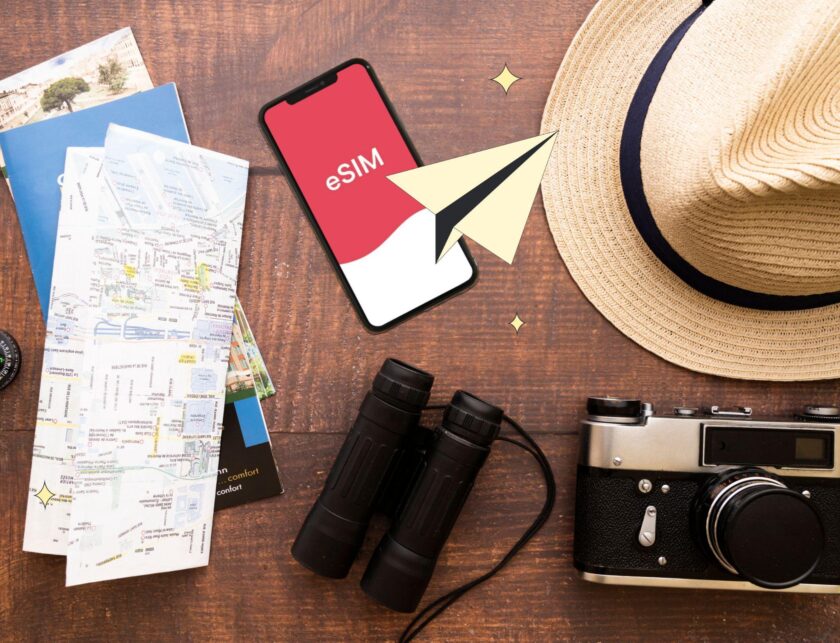
eSIMs are currently providing the foundation for a more connected world. Understand how this technology makes mobile life more efficient and connected.
For many decades, our connection to the digital world has been through a physical SIM card. But that’s not the case anymore. Now, we have an eSIM. An eSIM, unlike a physical SIM, is built directly into devices.
This means it provides a more convenient way for people to stay connected. What’s more, the eSIM is currently ushering in a new era of connectivity and digital innovation. Stick with us to learn more about this technology and how it is shaping the future of connectivity.
The evolution from SIM to eSIM: a quick history and what changed
The SIM card first appeared in the early 1990s as a revolutionary way to store user identity and enable network access. It was first bulky and full sized. But over time, the SIM card has been shrinking in size from the full-size to mini, then micro, and lately the nano versions.
However, all the SIM card versions maintain the same physical limitation. They require inserting, swapping, and can be easily lost. And that’s where the invention of the eSIM comes in. It is a digital alternative to the SIM card, and it’s soldered directly into a device’s hardware.
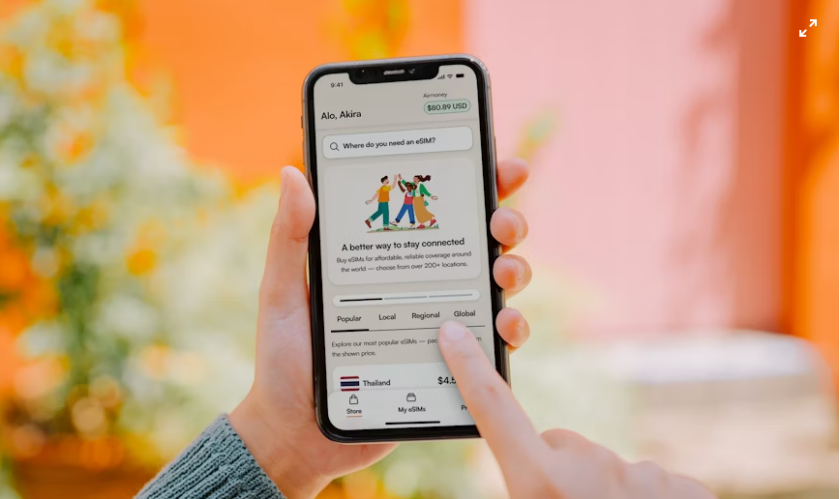
So, instead of inserting or swapping cards, you can now activate multiple carrier profiles remotely through a QR code or mobile app as long as your device supports the eSIM.
How eSIM works: the tech behind it: remote provisioning, profiles, security
The eSIM performs the same role as a physical SIM. It stores subscriber data and allows devices to connect to mobile networks. But what sets it apart is the following:
It enables remote provisioning.
Remote provisioning is a process that allows mobile network operators to send carrier profiles over the air. This means that instead of inserting a physical SIM card into your device, you can download a profile directly onto your eSIM chip. And that profile contains unique network settings, carrier information, and authentication keys.
It stores multiple profiles
A single eSIM can store multiple profiles, unlike a physical SIM, which only stores one. This allows effortless switching between operators, locations, or business and personal numbers without swapping any SIM cards. For example, you can easily switch from eSIM South Africa to eSIM Morocco if you are planning to travel from South Africa to Morocco. And you can do that from the comfort of your own home or hotel without visiting any store.
It is secure
An eSIM is built upon GSMA’s standardized encryption protocols. This ensures that data transfers and profile downloads occur in a controlled, tamper-resistant environment. And credentials are stored directly on the eSIM chip. So, they can’t be cloned or copied like a physical SIM.
What’s more, if you lose your devices, you can remotely disable the eSIM profile. This reduces the risk of any data theft and makes it more secure than a physical SIM card.
Advantages for users and businesses: flexibility, cost, fewer SIM swaps
The eSIM is the best connectivity solution available today. It provides several advantages, including the following:
It is flexible
As long as you have an eSIM-enabled device, there’s no need to hunt for local SIM cards or juggle multiple numbers. You can easily switch networks within minutes from the settings menu or companion app. This flexibility can be very valuable to frequent travelers, remote workers, and anyone living in cross-border regions.
It is cost-saving
eSIMs allow users to compare data plans. This allows you to switch plans to the most affordable ones while on the go. What’s more, an eSIM simplifies connectivity logistics for businesses. It does that by eliminating the need for physical SIM distribution and management among employees.
This lowers SIM operational costs. At the same time, it enables a more efficient device deployment for employees, especially in remote and global teams.
It eliminates the need for a SIM swap
As mentioned above, an eSIM is soldered into devices. This eliminates the need for a SIM swap. And ensures that companies no longer need to issue, ship, or replace physical SIM cards. This reduces e-waste and administrative overhead.
Also, individual users and businesses get to have fewer lost or damaged cards. What’s more, the elimination of SIM swapping means less connectivity downtime.
Challenges & limitations today: device support, roaming regulations, adoption hurdles
Even though the eSIM is an incredible innovation in the world of connectivity, it is not without its challenges and limitations. These challenges and limitations include the following:
- Uneven device support across markets. That’s because many flagship phones, tablets, and wearables support eSIMs. However, most budget models don’t support eSIMs. This inconsistency limits widespread adoption.
- Roaming regulation is also a challenge. That’s because not all countries and mobile operators have standardized systems for eSIM activation or cross-border use. This leads to an inconsistent user experience for travellers.
- Not all mobile operators offer fully compatible eSIM plans. This leads to gaps in coverage or configuration issues while switching providers.
- Some mobile carriers are hesitant to fully embrace eSIM. They fear reduced customer control and increased switching between networks.
- Lack of awareness and technical understanding causes adoption issues. That’s because there are users who fail to understand how eSIMs work and how to activate them.
What’s next: trends & predictions: consumer adoption, IoT use, embedded connectivity
The future of eSIM technology points towards widespread customer adoption. That’s because many smartphone brands and mobile carriers will make eSIM activation a standard feature. This will eventually eliminate physical SIM slots altogether.
Also, eSIMs will go beyond personal devices to IoT applications. That is in smart vehicles, logistics sensors, smart home systems, and connected appliances. This will enable millions of gadgets to connect and communicate seamlessly without manual setup.
What’s more, eSIMs will transform into iSIMs. It will combine embedded connectivity with computing power. And these iSIMs promise a world where cellular access is not just built into devices but into entire ecosystems. The result? A global network where people, machines, and data are constantly and intelligently connected.
Check live fuel prices near you before you set off.
Spotted something? Got a story? Email news (@) deeside.com

NEW: Add Deeside.com as a preferred source on Google to see more of our trusted coverage when you search.
Latest News