Stanford Advanced Materials Highlights Nitinol’s Advantages for Minimally Invasive Device Manufacturing
Stanford Advanced Materials (SAM) recommends Nitinol alloys to solve a key problem for medical device makers: devices must be flexible enough to navigate through narrow, winding blood vessels, but rigid enough to provide support once deployed. Nitinol does both.
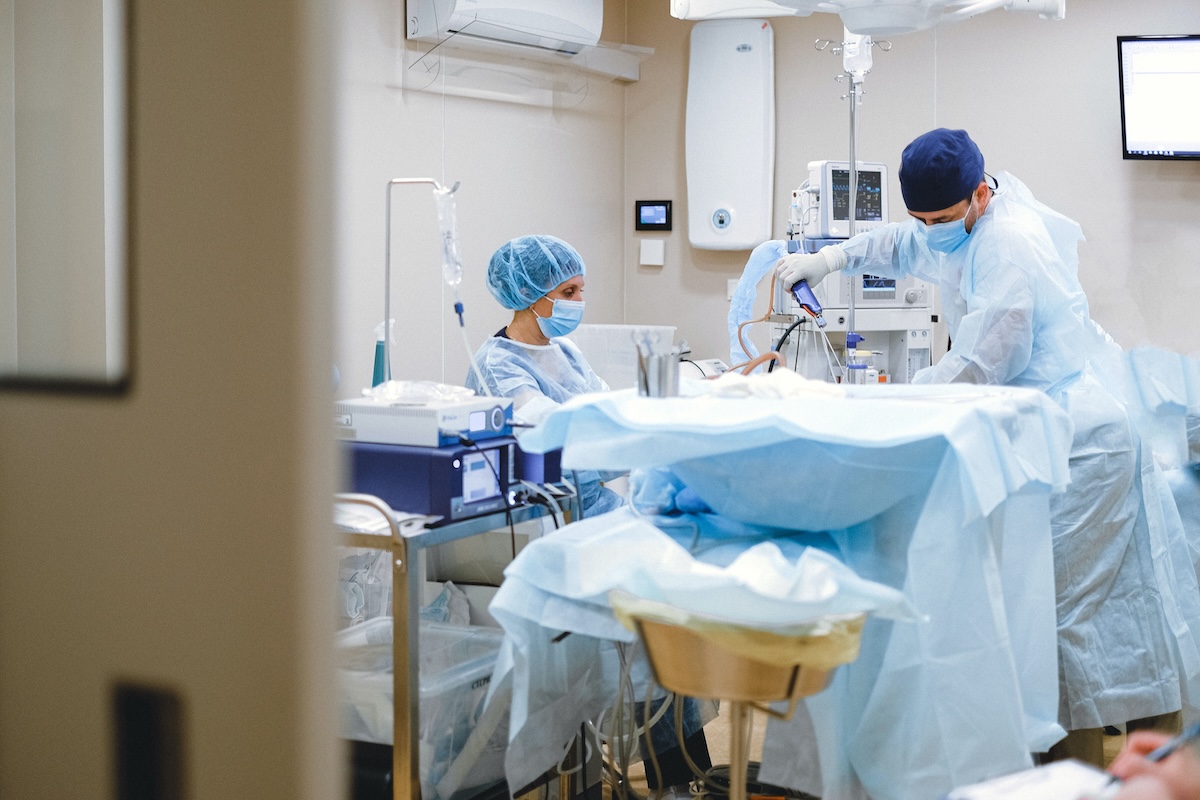
Photo by Anna Shvets: https://www.pexels.com/photo/nurse-and-surgeon-in-operating-room-4769122/
The Challenge Facing Minimally Invasive Device Manufacturing
According to Grand View Research, the global minimally invasive surgical (MIS) devices market is valued at over US $550 billion and is projected to surpass US $940 billion by 2033. As minimally invasive surgery expands into delicate anatomical territories like cerebral vasculature, device designers face a fundamental materials conflict. Devices must exhibit high flexibility to travel through curved catheters. However, once at the target site, they must provide adequate radial force to dilate vessels, occlude defects, or secure replacement valves.
Conventional metals like stainless steel and cobalt-chromium alloys fall short:
l Plastic Deformation: They have a low elastic strain, making them inadequate for self-expanding applications.
l Stress Shielding: Their high elastic modulus far exceeds human bone, which can cause bone resorption and implant loosening in orthopedic use.
l Fatigue: Long-term pulsatile cyclic loading threatens implant reliability.
Nitinol effectively transcends these physical limitations.
The Unique Properties of Nitinol Alloys Make It Possible
Nitinol, a shape memory alloy, fundamentally transcends the physical limits of conventional materials through two core characteristics, offering a viable pathway to address the challenges outlined above.
- Superelasticity
According to Scott Robertson’s paper published in International Materials Reviews, Nitinol can sustain recoverable strains of up to 10%—an order of magnitude greater than conventional medical-grade metals. This allows devices to be crimped into exceptionally small profiles for micro-catheters and automatically return to their original shape upon release without balloon dilation. Superelastic nitinol enables the development of self-expanding stents, transcatheter heart valves, and defect closure devices.
- Shape Memory Effect
In its low-temperature martensitic phase, Nitinol can be deformed into a temporary shape. When heated above its transformation temperature, which is tailored to just above human body temperature, it actively reverts to its pre-engineered shape, allowing for autonomous deployment.
Additionally, medical-grade nitinol’s elastic modulus (28–83 GPa) closely matches human bone, reducing stress shielding. It also exhibits excellent biocompatibility, corrosion resistance, and superior fatigue strength.
Diversified Nitinol Solutions for Multiple Applications
Medical-grade nitinol materials are available in various forms to serve different medical device applications. Each form factor offers distinct, differentiated solutions tailored to specific clinical needs.
- Nitinol Tubing
The backbone of laser-cut self-expanding stents, biopsy devices, and endoscopic instruments. SAM ensures tight concentricity control and excellent surface finish to achieve high manufacturing yield rates.
It offers exceptional kink resistance, smooth torque transmission, and precise handling for navigating tortuous pathways without damaging vessel walls. Also, it’s used for braided stents and filters.
- Nitinol Sheet & Foil
This form provides design flexibility by allowing engineers to design products flat before forming them into final shapes. SAM delivers exceptionally tight thickness tolerances for predictable final dimensions and high production efficiency.
- Nitinol Alloy Powder
Enables advanced manufacturing techniques such as powder metallurgy, metal injection molding (MIM), and additive manufacturing (3D printing) for complex, patient-specific implants and porous structures.
Different nitinol materials
SAM Offers a Highly Diversified Nitinol Product Portfolio
SAM provides a comprehensive Nitinol product portfolio designed to meet the stringent demands of medical device manufacturing, including:
- Wire: Available in diameters as fine as 0.1 mm, suitable for guidewires, braided stents, filters, and other precision applications
- Sheet & Foil: Manufactured with tightly controlled thickness tolerances, ideal for devices designed in planar form and subsequently formed into final geometries
- Tubing: Featuring excellent concentricity control and high surface finish, serving as the core material for self-expanding stents
- Springs & Custom Shapes: Available in custom configurations tailored to specific customer requirements, addressing even the most unique application needs
- Platinum-Core Nitinol Composite Wire: Retains superelasticity while adding enhanced electrical conductivity and X-ray visibility
- Nitinol Alloy Powder: Available in multiple size distributions (e.g., 15–45μm, 45–75μm) with a purity of ≥99.9%.
About Stanford Advanced Materials (SAM)
Beyond our product range, SAM delivers customization to meet specific specs, rigorous quality control for batch-to-batch consistency, and expert medical manufacturing support—from material selection to production—helping accelerate your time-to-market. Engineers and medical device manufacturers seeking high-performance Nitinol materials can explore SAM’s complete product portfolio or contact the team for customized specifications and technical support.
Check live fuel prices near you before you set off.
Spotted something? Got a story? Email news (@) deeside.com

NEW: Add Deeside.com as a preferred source on Google to see more of our trusted coverage when you search.
Latest News