Over half of black bin waste in Flintshire could be recycled
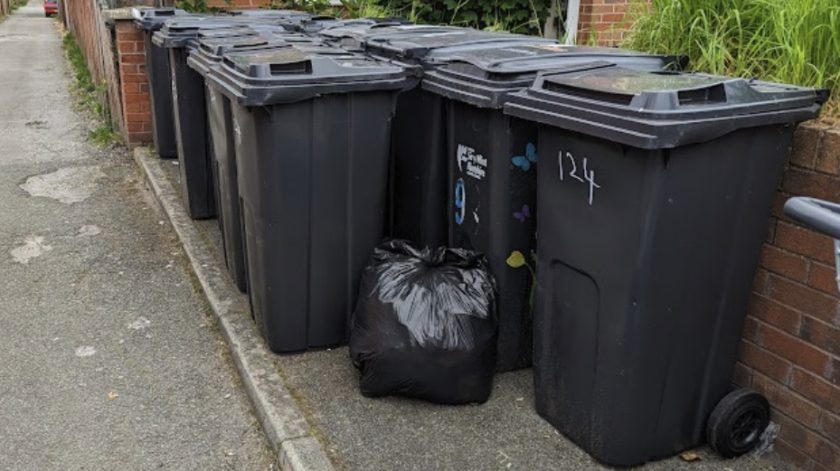
More than 50% of household waste in Flintshire’s black bins could still be recycled.
The revelation came from Flintshire’s Chief Officer for Streetscene and Transportation Katie Wilby as the authority’s Environment and Economy Overview and Scrutiny Committee reviewed the council’s Corporate Risk Register.
On April 28 Flintshire will move to three-weekly black bin collections. All recycling will be collected weekly. The changes are calculated to bring down each household’s average weekly non-recyclable waste volume by 30 litres.
The goal is to reach the Welsh Government’s target of recycling 70% of all household waste.
Flintshire County Council still has £540,000 of fines from the Senedd hanging over it for missing previous recycling targets. As a result, it is still flagging the disposal of non-recyclable waste – known as residual waste – as a risk.
Buckley Pentrobin councillor Mike Peers wanted to know how officers planned to deal with the risk that residual waste becomes a persistent problem.
“If we achieve 100% of our recycling targets there is going to be an element of residual waste,” he said. “What people are going to get rid of that’s not part of their recycling is hard to predict.
“How do you stop the increase in residual waste if residents recycle everything they can? That’s a fundamental question.
Ms Wilby said that current recycling levels were far from where they needed to be as the county prepares to make a significant change to waste collection.
“A number of reports have shown that more than half of what’s put in the black bin at the moment could have been recycled,” she said. “That’s what we’re trying to reduce.
“The aim is to recycle or recover as much as possible. We have some projects around repair and reuse at the moment, with the aim being to stop as much going into the residual waste stream as possible.
“At the moment we’re not seeing that reduction at all which is why it’s a corporate risk.”
She put the blame on convenience – the bi-weekly black bin collection means residents don’t need to be as mindful of what they throw into general waste because their bin can cope. Moving the three-weekly will mean residents need to recycle as much waste as possible.
“Because people have the capacity in their existing bins, they’re not using the food waste recycling,” said Ms Wilby. “They’re not recycling all the materials that we do collect at the kerbside.
“There will always be a residual amount of non-recyclable goods. Whatever is in the black bin we will try to recover or recycle it but there is going to be an element of residual waste and we are constantly working to reduce that further.
“For example, similar to schemes run by some high-street retailers, we have arrangements in place to recover and reuse material from electrical goods that come to the HRC. Thanks to the visible waste policy we now operate at HRCs they don’t go to landfill.”
By Alec Doyle – Local Democracy Reporter
Check live fuel prices near you before you set off.
Spotted something? Got a story? Email news (@) deeside.com

NEW: Add Deeside.com as a preferred source on Google to see more of our trusted coverage when you search.
Latest News