The Science of Digital Power: How Elite World of Warcraft Guilds Build Eternal Empires
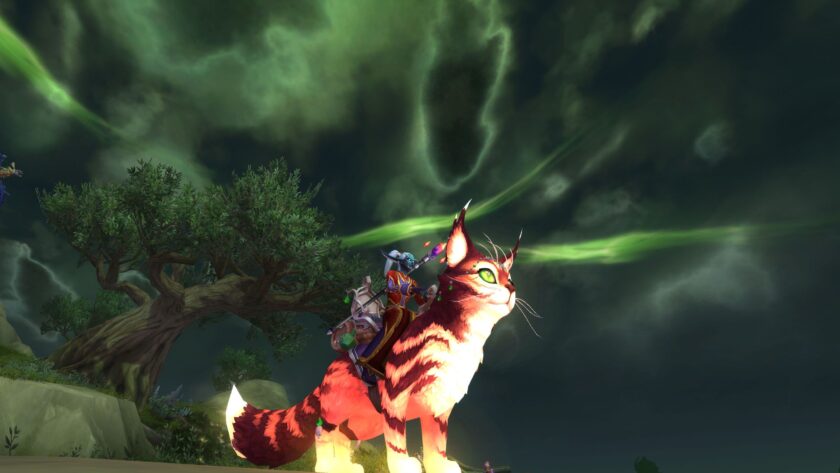
World of Warcraft is a game that has been one of the most powerful MMORPGs in the history of gaming over the last twenty years. Millions of players log in every day to raid, push Mythic+, engage in PvP, or continuously upgrade their characters. At first glance, the game seems to be straightforward: kill bosses, get equipment, rinse and repeat. However, dominance in the long-term within the World of Warcraft has never been a matter of mere repetition.
When taken to the extreme, the game becomes a leadership, logistics, economics, and psychological survival system. The infrastructure is the foundation of success and not impulse. This paper discusses the formation of sustainable power structures by elite guilds. We will discuss roster management, preparation strategies, human factors, and why these principles are still applicable despite expansion cycles.
When the Game Becomes an Organization
Liquid, Echo, Method, and similar organizations consider progression as a calculated process. Each raid tier is turned into a campaign. Each roster decision has a strategic implication. Raw mechanical skill is not a motivating factor for success. A professional WoW boost cannot create cohesion, discipline, or strategic alignment, but can speed up the gearing of individuals. It is the systems that are the real benefit. Systems outlive patches.
The gap between an average mythic guild and a Hall of Fame contender is measured in preparation hours, logistical control, and psychological resilience. When a boss requires 300-400 pulls, marginal errors compound into catastrophic setbacks. At that scale, the fight is no longer against scripted mechanics. It is against entropy inside the team.
Engineering the World-First Machine
The preparation for a world-first race begins months before the raid opens. When the servers become live, elite guilds have already constructed layered systems that will seek to gain all possible benefits out of the initial reset. Preparation usually involves:
- Intensive PTR testing to simulate boss mechanics and identify patterns.
- Internal development of custom WeakAuras for precise encounter timings.
- Strategy labs where analysts test positioning models and damage windows.
- Full optimization of pre-raid gear through split runs and crafted item pipelines.
- Multi-character readiness for rapid swaps to counter tuning changes.
- Class stacking models are designed around projected encounter requirements.
Every component contributes to incremental efficiency. Together, they produce exponential benefit in the initial week of development.
PTR testing is not an informal practice. Teams capture pull data, mechanic sequences, and test boundary conditions. WeakAuras are internal software applications that lessen the cognitive load during high-pressure attempts. Multi-character preparation can be used to instantly adapt to hotfixes or tuning changes. Optimization is not limited to the gear level. It also has flawless secondary stat distribution, pre-farmed consumables, coordinated split raids, and mapped cooldown rotations.
When a world-first competitor joins the instance, they are implementing a practiced operational blueprint. This is why the gap between elite and mid-tier guilds cannot be closed by mechanical skill alone.
Pressure Systems and Cultural Engineering
Engineering solves the mechanical equation. Human behavior is a much more volatile variable. The most efficient roster and cooldown plans may fail after 200 unsuccessful pulls. Precision begins to erode. Frustration builds. Psychological stability is as important as damage output at the top of the competition. Best guilds build cultures that are resistant to pressure. The core mechanisms usually involve:
- Raid block-based log-based performance reviews.
- Obvious chain of command in progression decisions.
- Clear behavioral norms of communication.
- Brief, structured debriefing following significant failures.
Such systems minimize emotional instability. Feedback is based on facts and not ego. Resilience, rather than skill, filters players. Burnout has to be considered even by the most powerful culture. Historical patterns show that 15-25% of players step back after demanding tiers. Intelligent leadership foresees this loss and stocks backup pipelines.
Retention and Motivation in Elite Guilds
The best-planned guild cannot perform well when its members drop out in the middle. Contemporary raiders are not adolescents who have unlimited free time. Most of them are working full-time, have families, and other responsibilities. Advancement in World of Warcraft has become more of a hobby. They are voluntary and unpaid. Of course, many top players also earn by providing WoW boost services to other players. This enables them to make ends meet and, at the same time, hone skills that will help the guild to evolve.
Leading guilds keep attendance and participation by respect, recognition, and formal rewards:
- Clear goals and expectations — Players know what is needed and why it is important.
- Recognition of effort — Even minor contributions are publicly mentioned to strengthen value.
- Flexible planning — Attendance is organized, but the scheduling is based on real-life constraints.
- Growth opportunities — The players switch roles or do some side projects such as WeakAura development, strategy testing, or bench optimization.
The practices promote voluntary commitment. Players still play not just to win the world first, but to be part of something, to accomplish something personally, and to be collectively recognized.
Subtle structural benefits also enhance retention. Well-established leadership structures, established rotation schedules, and open performance monitoring minimize ambiguity. When the players are aware of the plan and their role in it, they are less likely to burn out. Through mechanical preparation and human factor consideration, elite guilds develop resilience that allows them to survive through numerous expansions and intense raids.
The Lynchpin Variable
Each guild has a few players whose loss would disrupt the whole setup. These lynchpins do not necessarily have the highest damage dealers. They often include:
- The tactical analyst that is decoding encounter mechanics.
- The morale stabilizer that prevents the collapse in long wipe nights.
- The logistical coordinator that is in charge of rosters and supplies.
One spontaneous exit may cause a wave of exits in case the dependency concentration is excessive. Durability is not concerned with peak performance but rather with structural resilience.
Tactical Checkpoints for Sustainable Dominance
Without operational checkpoints, ambition brings about inconsistency. Guilds that want to grow in the long term need to formalize the review and optimization cycles. Common checkpoints include:
- Audits are done on preventable deaths weekly instead of damage rankings.
- Open economic accounting of resources in the guild.
- Bench roster maintained in readiness to progress.
- Debriefing sessions of 10-15 minutes were formalized after every raid night.
- Constant recruitment pipelines even when times are stable.
Minor adjustments in attendance, economic control, and review structure add up to quantifiable benefit. Consistency is multi-level. Systems are needed to motivate.
From Guild Master to Systems Architect
Leadership evolution defines long-term guild survival. Early-stage leaders often operate as social coordinators. Elite leaders function as systems architects. They develop processes that are not subject to short-term morale fluctuations or roster changes. Infrastructure turns into a major asset. Boss killings are not emotional. Once the process of progression changes to a proactive system design, the results stabilize. Growth resets can alter experiences, yet disciplined organizational structures are still effective.
World of Warcraft rewards mechanical execution. It maintains control by administrative accuracy, cultural decisiveness, and human factor consideration. The guilds that have survived over the years know one simple fact: digital power is not taken by accident. It is built, fortified, and guarded.
Check live fuel prices near you before you set off.
Spotted something? Got a story? Email news (@) deeside.com

NEW: Add Deeside.com as a preferred source on Google to see more of our trusted coverage when you search.
Latest News