Shotton pushes for tougher shared house limits as Flintshire prepares to adopt new HMO planning guidance
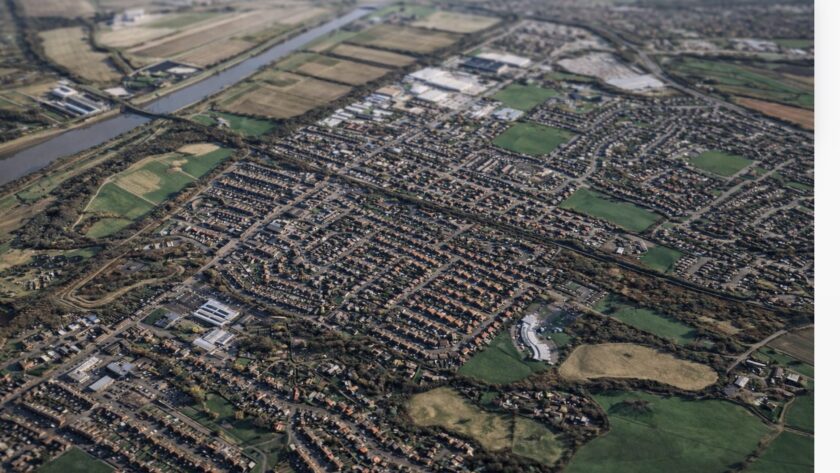
New planning guidance for houses in multiple occupation is due to be considered by Flintshire County Council’s Environment and Economy scrutiny committee on Tuesday, with Shotton community leaders warning the proposed rules do not go far enough.
The interim guidance sets out requirements on parking, amenity space, bin storage and proximity.
Under the proposed rules, no more than two HMOs can sit side by side, and an ordinary home cannot be sandwiched between two HMOs.
A house in multiple occupation, or HMO, is a property shared by three or more people from different households, most commonly bedsits or shared rental accommodation.
The guidance is explicit about one gap: it cannot yet enforce a concentration limit.
A concentration limit would allow Flintshire County Council to refuse HMO applications once a set percentage of properties on a street had already been converted.
To apply that threshold, the council first needs a full licensing scheme mapping where every HMO in Flintshire is located.
That scheme does not yet exist.
The Community and Business Protection service is developing a small HMO licensing scheme, recently approved by the council, and the guidance states the rules will be reviewed once that data becomes available.
Shotton Town Council, three ward councillors covering Shotton and the joint Hawarden, Broughton and Bretton Community Council all submitted objections or concerns during public consultation.
Shotton Town Council said the rapid growth of HMOs, particularly in Victorian and Edwardian terraced streets, was fundamentally altering the character of the town.
Hawarden and Broughton and Bretton community councils called for at least three non-HMO properties between any two HMOs, rather than the two in the current guidance.
In their joint consultation submission, Shotton ward councillors wrote: “A substantial number of HMO conversion applications have been submitted for properties located in densely populated streets characterised by Victorian and Edwardian terraced housing.
“These neighbourhoods already contend with challenges such as limited off-road parking and issues related to waste management.”
Several community councils also called for the parking standard of 0.4 spaces per bedsit to be increased, arguing it did not reflect car ownership levels in areas with limited public transport.
Officers rejected that change, noting the standard has been accepted by planning inspectors in appeal decisions and is set through the Local Development Plan rather than the guidance note.
Natural Resources Wales called for stronger protections around flood risk, protected species and water quality in catchments for the River Dee and Bala Lake Special Area of Conservation.
Those amendments were accepted and are included in the guidance.
Public consultation on the draft guidance ran from 23 September to 4 November 2024, with the council considering the responses in January 2026 before finalising the document.
HMO development in Flintshire has been concentrated mainly in Buckley, Shotton and Connah’s Quay.
Once formally adopted, the guidance will be used when the council considers planning applications and appeals for HMO development across the county.
Check live fuel prices near you before you set off.
Spotted something? Got a story? Email news (@) deeside.com

NEW: Add Deeside.com as a preferred source on Google to see more of our trusted coverage when you search.
Latest News