Senedd: Politicians told steel market could be undermined in weeks
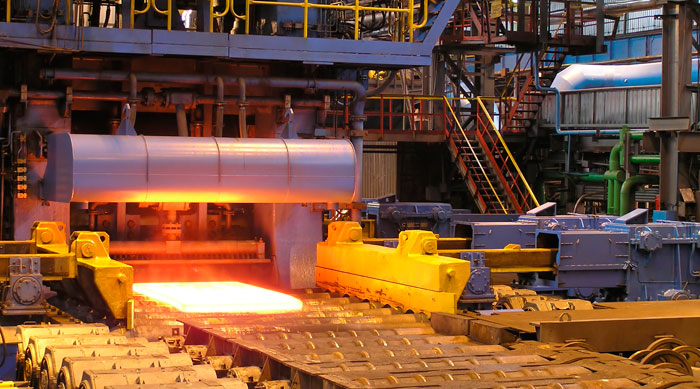
The Welsh steel industry faces the threat of large scale dumping of foreign steel unless the UK Government moves quickly to introduce trade safeguards, the Senedd heard on Wednesday.
Plaid Cymru’s Luke Fletcher, the party’s economy spokesperson, told the Cabinet Secretary that evidence given to the Westminster Business and Trade Committee on 10 February by Tata Steel’s commercial director had warned the domestic market could be “significantly undermined within a matter of weeks” without clarity on future protections.
“Without decisive action, the UK risks becoming a destination for the dumping of excess steel,” Mr Fletcher said.
“This has obvious implications for Wales, where we are already seeing one of the most consequential industrial transitions in recent Welsh history.”
Tata operates steel sites across Wales, including at Port Talbot and at Shotton on Deeside Industrial Park, where the company has a long established packaging and coated steel operation.
Mr Fletcher pressed Rebecca Evans, the Cabinet Secretary for Economy, Energy and Planning, on what direct representations the Welsh Government was making through the UK Steel Council and other channels.
He noted the steel strategy, which is supposed to set out the replacement trade protection regime, had been “pushed back several times with no clarity as yet on its expected arrival.”
Ms Evans confirmed the First Minister had raised the matter directly with the Prime Minister in a call last week.
“She was able to set out the urgency now of having that steel strategy in place and also for the safeguards to be in place as well,” Ms Evans told the Senedd.
She added that the First Minister had been intending to publish a written statement on steel, though she was unsure whether it had yet been issued.
Ms Evans said she had met unions representing steel workers across Welsh sites, and that they had been “absolutely clear that the steel strategy has to be treated as a matter of urgency.”
“We agree, and we are taking that up with the UK Government again as a matter of urgency,” she said.
“Welsh Government has a role and a seat on the Steel Council, so we take every opportunity there to make sure that the specifically Welsh perspective is represented.”
Mr Fletcher then turned to procurement, an area where the Welsh Government has more direct influence.
He said workers and unions were “deeply frustrated” that public infrastructure projects continued to source steel from overseas when domestic producers could supply it.
He cited examples of thousands of tonnes of imported steel being purchased despite bids from UK producers.
He called for steel to be designated as critical national infrastructure, which would allow governments to require the use of UK produced steel on public contracts.
He also pointed to a 2016 Welsh Government report on public procurement of steel whose recommendations, he said, remained unimplemented.
Ms Evans agreed procurement was “one of the ways in which we can seek to safeguard our steel industry for the future.” She said officials had been meeting British Steel to explore what more could be done through Welsh procurement rules.
“I can’t give any more of an update in terms of progress there,” Ms Evans said, “but I do want to reassure colleagues that those conversations are ongoing.”
In his final question, Mr Fletcher challenged what he described as a “laissez-faire attitude” from the Welsh Government, arguing there was a growing perception that Wales was waiting for decisions to be made in London rather than setting out its own demands.
He said union representatives wanted to see at least £1 billion from the national wealth fund ring-fenced specifically for Port Talbot to support future investment and capability.
He also noted the UK Government had “an active vested interest in Scunthorpe,” raising the question of whether Welsh sites risked being deprioritised.
Ms Evans said the Welsh Government had “always said that there should be a specific and significant amount of that fund ring-fenced for Wales.”
But she acknowledged challenges, saying it required co-investment with industry and that the government needed to work with companies to identify specific projects.
“Those conversations continue, particularly around what the national wealth fund could deliver,” Ms Evans said. She did not name a figure or a timeline.
“I know that she hears, as we have all heard, the anxiety from people working within the sector,” Ms Evans said of the First Minister.
“They want to understand what we are doing, as the Welsh Government, and of course they want urgent action from the UK Government, which we also want.”
Check live fuel prices near you before you set off.
Spotted something? Got a story? Email news (@) deeside.com

NEW: Add Deeside.com as a preferred source on Google to see more of our trusted coverage when you search.
Latest News