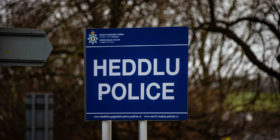
Policing overhaul raises cross-border concerns in North Wales

The Police and Crime Commissioner for North Wales has warned that any overhaul of policing must protect close operational links with neighbouring forces in England, as the UK government sets out plans billed as the biggest reforms to policing in around 200 years.
Responding to proposals published by the Home Office, North Wales PCC Andy Dunbobbin said day-to-day policing in the region is closely tied to the North West of England, particularly when tackling serious and organised crime.
“In North Wales, day to day policing activity is closely linked to the North West of England through established patterns of serious and organised crime, including county lines drug supply, organised acquisitive crime, and the movement of offenders across borders,” he said.
“Operational effectiveness relies on well embedded joint working with neighbouring English forces, regional organised crime units, and partner agencies to manage risk, safeguard vulnerable people, and disrupt criminal networks.”
He said any changes to policing structures must support those operational realities.
“Any change to policing structures must support these operational realities and avoid introducing barriers that could undermine intelligence sharing, joint tasking, or rapid operational response,” he said.
The comments follow a statement in Parliament on Monday 26 January by the Home Secretary, Shabana Mahmood, alongside publication of a white paper titled From local to national: a new model for policing.
The government says the reforms are intended to modernise policing, reduce duplication and improve performance, with a shift towards national capabilities for serious crime alongside changes to local policing structures in England and Wales.
The white paper sets out plans to create a new National Police Service, bringing together national functions including the National Crime Agency, counter-terrorism policing and new Regional Crime Hubs, which would replace existing Regional Organised Crime Units. It also says the new service would include a national forensics function.
Under the proposals, the National Police Service would be led by a National Police Commissioner, described as the most senior police officer in the country. It would take responsibility for functions including aviation, roads policing and forensics, and would also set professional standards and training requirements.
The white paper also says the College of Policing would be folded into the new body, alongside operational functions of the National Police Chiefs’ Council, which would become the Chief Constables’ Council.
Major changes are proposed to procurement and technology. The white paper says the National Police Service would oversee the purchase of IT, equipment and technology, with the Police Digital Service and Blue Light Commercial moving into the new structure. The Home Office estimates this approach would save £354 million by 2029, with savings reinvested into frontline policing.
A National Public Order Commander role would be created within the National Police Service to co-ordinate responses to large-scale public disorder and oversee the mobilisation of resources under mutual aid arrangements.
Responsibility for fraud would also move into the National Police Service. The white paper says the Serious Fraud Office would remain a standalone body, and that a review would consider whether the City of London should retain lead responsibility for fraud reporting and investigations.
Technology features heavily in the reforms. The white paper sets out plans for a National Centre for AI in Policing, known as Police.AI, backed by £115 million over three years, alongside a five-fold increase in the number of live facial recognition vans.
Structural change to local forces is another central element. The white paper proposes a significant reduction in the number of police forces in England and Wales from the current 43 by 2034, creating larger regional forces. A review is due to report in the summer on how mergers would work, with ministers expecting some to proceed within the next three years.
It says the new larger forces would be better equipped to tackle serious and organised crime, including homicides, drug trafficking and county lines networks. Each force would be divided into Local Policing Areas, with neighbourhood officers responsible for issues such as shoplifting, phone theft and anti-social behaviour.
The white paper also proposes major changes to governance and accountability. Police and Crime Commissioners would be abolished in 2028, with the government saying this would save the taxpayer at least £100 million.
In some areas, oversight would transfer to directly elected mayors and their deputies, while in others new Policing and Crime Boards made up of council leaders and officials would take on the role.
Ministers would gain new statutory powers to intervene in failing forces and to sack chief constables. National targets would be introduced for answering 999 calls, emergency response times, victim satisfaction and public trust, with performance published under a central framework.
The reforms also include a Licence to Practise for police officers, which would have to be renewed during their career, and a direct entry route allowing people from other sectors to join at inspector level and be fast-tracked to superintendent. Expanded mental health support for officers and a review of the Independent Office for Police Conduct are also proposed.
Devolved force in Wales?
In Wales, the reforms have reopened long-running arguments about policing governance and devolution.
During questions in the House of Commons, Plaid Cymru Westminster leader Liz Saville Roberts asked whether the reforms should be used as a moment to devolve policing to Wales.
“The white paper recognises that changes to policing governance and crime prevention in Wales will have to reflect the existence of over a quarter of a century of devolution.
“Meanwhile, three independent commissions have recommended that justice and policing be devolved to Wales.
“Considering around 56% of our police funding already comes from devolved sources – does she not agree that this package of radical changes is exactly the right time for the devolution of policing to Wales?”
The Home Secretary responded: “No I do not.”
After the exchange, Ms Saville Roberts said the refusal to devolve policing sat uneasily with claims of radical reform.
“The Home Secretary talks up these proposals as radical reform, yet continues to block the devolution of policing to Wales – despite this being an evidence-based position endorsed by three independent commissions over more than a decade,” she said.
“This flat refusal comes just days after the First Minister of Wales, Eluned Morgan, called for the devolution of justice, exposing the deep divisions and lack of coherence within Labour’s ranks.
“Policing works best when it is accountable to the communities it serves. If ministers are serious about making policing more efficient and effective, they cannot keep ignoring the clear and consistent case for devolution. Any credible programme of radical reform must include the devolution of policing powers to Wales.”
The four Welsh Police and Crime Commissioners also issued a joint statement welcoming modernisation but warning that reforms must reflect how policing already operates in Wales.
“We recognise and support the need to modernise policing and the UK Government’s White Paper provides us with that opportunity,” they said.
“Policing in Wales operates within a distinct public service landscape, shaped by close partnerships with Welsh Government, local authorities, health services, and our NGO partners.
“The partnership approach we have developed over many years here in Wales has been praised by successive governments, and any review of the policing model and structures must reflect this work. It must also consider the evidence of what works best for the communities and people of Wales.
“Vital to this is the commitment that policing is rooted in the communities they serve, we strengthen neighbourhood policing and that we maintain and enhance local accountability.
“As locally elected representatives, Welsh PCCs are committed to playing a full and meaningful role in designing future arrangements for Wales, ensuring continuity, stability, and democratic accountability during any transition. The UK Government must now demonstrate how the regional and structural change it is proposing would enhance local accountability and deliver the best possible service to our communities.”
Check live fuel prices near you before you set off.
Spotted something? Got a story? Email news (@) deeside.com

NEW: Add Deeside.com as a preferred source on Google to see more of our trusted coverage when you search.
Latest News