Ombudsman: cancer delays at north Wales health board likely made patient’s condition worse
Betsi Cadwaladr University Health Board has been found to have failed a prostate cancer patient for the fourth time in nine years, with the Public Services Ombudsman for Wales saying delays in his care more likely than not contributed to his cancer becoming more advanced.
The public interest report, issued today, found that the patient, referred to as Mr C, waited more than 180 days from the point of suspicion to the start of definitive treatment.
That is more than three times longer than he should have waited.
The ombudsman identified a delay of almost four months before Mr C received a PSMA PET scan, an advanced imaging test used to identify and visualise prostate cancer cells.
The scan delay was found to be unacceptable and a clear service failure.
Because the scan was significantly delayed, Mr C’s hormonal therapy was also pushed back unnecessarily, the report found.
The ombudsman did find it was clinically appropriate to wait for the scan result before starting hormonal therapy, as starting it earlier could have affected how the scan was interpreted.
But that finding did not change the overall conclusion that the delay to the scan itself caused an avoidable injustice.
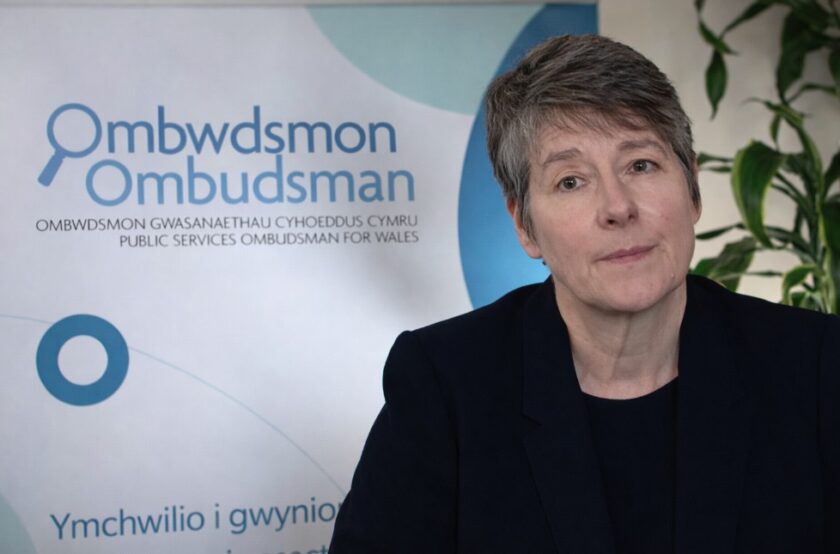
Public Services Ombudsman for Wales Michelle Morris said: “This is the fourth report issued over nine years by my office about delayed prostate cancer management at this Health Board.”
“It is therefore bitterly disappointing to be reporting once again on failings in the same area.”
Morris said previous recommendations had not been fully complied with, and an improvement plan the health board agreed with the Royal College of Surgeons had not been completed, with a majority of its actions still outstanding.
“The Health Board cited staff sickness and capacity issues as reasons for the delays – explanations that have also been given in previous investigations by my office,” she said.
“However, these reasons do not fully explain why Mr C waited more than 180 days from the point of suspicion to definitive treatment.”
On the outcome for the patient, the ombudsman said: “On the balance of probabilities, these delays more likely than not contributed to Mr C’s cancer being more advanced.”
“The uncertainty this creates will sadly be an enduring injustice for Mr C and his family.”
The report also criticised the health board’s handling of Mr C’s complaint, finding that BCUHB failed to recognise the delays when it responded to him.
The ombudsman referenced its own previous report, titled Groundhog Day 2, which found that poor complaint handling compounds the sense of injustice for complainants.
The ombudsman made a series of recommendations, all of which Betsi Cadwaladr University Health Board accepted.
These include apologising to Mr C, sharing the report with the clinicians involved in his care, auditing patients who required a PSMA PET scan over the past two years to check their waiting times, and reviewing local prostate cancer pathways against the National Optimal Pathway used by other health boards in Wales.
The health board has also been asked to review Mr C’s case under its legal Duty of Candour to determine how his cancer pathway exceeded 180 days, and to report its findings to its quality and patient safety committees and include them in its annual report.
Betsi Cadwaladr University Health Board is currently in special measures.
Check live fuel prices near you before you set off.
Spotted something? Got a story? Email news (@) deeside.com

NEW: Add Deeside.com as a preferred source on Google to see more of our trusted coverage when you search.
Latest News