North Wales health board under-reported thousands of patients waiting for treatment, review finds
The Welsh Government has published the findings of an independent review into how Betsi Cadwaladr University Health Board under-reported its NHS waiting list figures for months, blaming governance failures that allowed a coding error to go undetected.
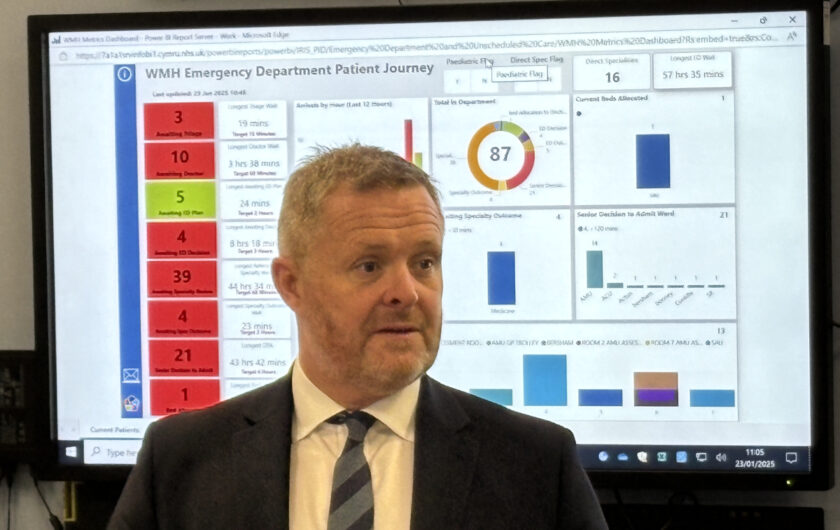
The final review report was published today, 13 March, alongside a written statement to the Senedd by Cabinet Secretary for Health and Social Care Jeremy Miles MS.
BCUHB covers all of north Wales, including Flintshire, and is the NHS body responsible for hospital treatment for patients across the Deeside area.
The Welsh Government suspended publication of BCUHB’s referral to treatment, or RTT, waiting times data on 27 November 2025 after identifying anomalies in the figures.
RTT data measures how long patients wait from GP referral to the start of hospital treatment.
The review was led by Welsh Government and involved Digital Health and Care Wales, NHS Wales Performance and Improvement, Welsh Government statisticians, and Cwm Taf Morgannwg University Health Board as a peer representative.
The report confirms the error originated in September 2025, when BCUHB transferred a high volume of patients onto a generic clinician code, known as CONSG, as part of a national initiative to offer additional outpatient appointments through an external provider.
The CONSG code was incorrectly excluded from the health board’s month-end RTT reporting process.
The review found the error was potentially masked by expectations of a significant reduction in waiting numbers due to increased activity, and by a failure to check figures from different parts of the organisation against each other.
When the error was corrected for October’s figures and the missing patients were added back in, the sudden increase in numbers was flagged nationally as an anomaly, which is how the wider problem came to light.
By that point, patients had been missing from the official monthly figures since April 2025.
The scale of the under-reporting grew as the year progressed because more patients were being treated by independent providers from August 2025 onwards.
For August 2025, the corrected BCUHB total was 4,784 higher than the original published figure.
That included 2,560 additional patient pathways where people had been waiting more than 52 weeks, and 145 additional pathways waiting more than 104 weeks.
A patient pathway is the recorded journey from referral to treatment — one patient can have more than one pathway open at a time.
The review is clear that patient treatment was not affected.
“Patient activity was recorded accurately within the Patient Treatment List at all times, with no impact on patients’ treatment,” the report states.
The review found governance failures at BCUHB that allowed the error to go undetected, including the teams responsible for operations, data and performance not checking their figures against each other, weak processes for checking reported figures against source data, and providing little explanation of any changes when submitting figures to national teams.
Executive oversight was also found to have gaps during periods of leave.
At the national level, the review found that the anomaly was ultimately identified only through a comparison of official monthly data with weekly management information, a check that was not at the time a standard part of routine quality assurance by Welsh Government statisticians, but has since been integrated into regular processes.
The report notes that Swansea Bay University Health Board runs daily internal RTT reporting, citing it as best practice that other health boards should follow.
The review makes a series of recommendations for BCUHB, including fully embedding a strengthened standard operating procedure with executive sign-off, introducing quarterly audits of unreported patients, and improving the quality of information provided when submitting figures to national teams.
For NHS Wales and Welsh Government, the review recommends developing an all-Wales RTT governance and validation minimum standards framework, strengthening automated trend-comparison checks, and promoting daily or near-daily internal RTT validation across all health boards.
A national review of how consultant and non-consultant patient pathways are defined for reporting purposes is also recommended, though the review states this is a separate issue from the BCUHB error.
Revised data for April to November 2025 was published on 13 January 2026.
Regular RTT reporting resumed on 22 January 2026.
The Office for Statistics Regulation has endorsed the actions taken in response to the data issues.
BCUHB has been in special measures since February 2023 following serious concerns about governance, patient safety and operational performance.
Updated waiting times figures for BCUHB and the rest of Wales are due to be published on 19 March.
Check live fuel prices near you before you set off.
Spotted something? Got a story? Email news (@) deeside.com

NEW: Add Deeside.com as a preferred source on Google to see more of our trusted coverage when you search.
Latest News