Hawarden workhouse escape detailed in newly opened archives
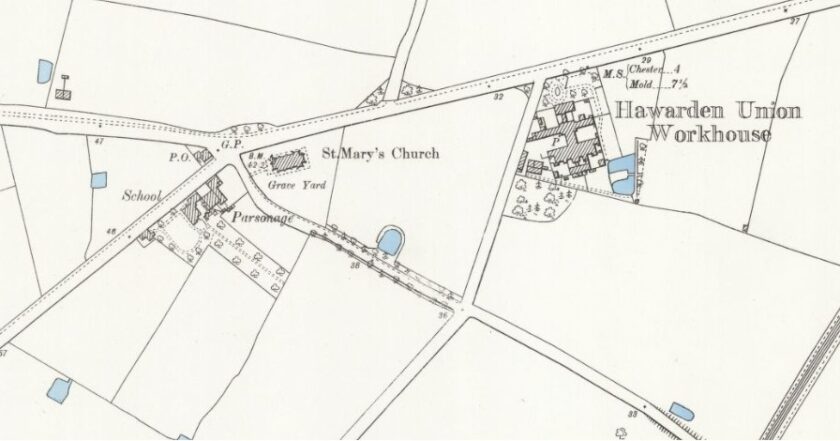
Previously closed workhouse records have revealed the story of a father who absconded from Hawarden Union Workhouse in 1925, leaving his wife and five children behind for several weeks.
The case appears in the admission and discharge registers held by North East Wales Archives, which has opened a number of sensitive records following the expiry of a 100-year closure period.
In January 1925, the Garston family were admitted to Hawarden Workhouse from Buckley parish. The register records Edmund and Margaret Garston and their five young children, Cyril, Linda, Dennis, Emlyn and Margaret.
A few days after admission, the register notes that Edmund absconded from the workhouse. Leaving without permission was against workhouse rules, with inmates required to obtain approval from the workhouse master before departing.
Escaping while wearing workhouse clothing could also result in fines or imprisonment, as it was classed as theft.
At first glance, the entry suggests that Edmund abandoned his family inside the institution.
However, later entries show that the family were reunited in March 1925, when Margaret and the children were discharged to the care of their husband and father.
Hawarden Workhouse had been established almost a century earlier, according to article by workhouses.org.uk
In March 1830, thirteen of the fourteen townships in the parish of Hawarden opened a workhouse in a former mansion rented for £50 a year, along with 22 acres of land at £2 a year. The premises were designed to accommodate up to 90 inmates.
A report from 1834 described the institution as having a governor and matron, jointly paid £40 a year, and a surgeon receiving £30 per annum to attend sick paupers both inside and outside the workhouse.
The report stated that the proximity of the church and national school meant a separate chaplain or schoolmaster was not considered necessary. Rules were intended to prevent residence becoming desirable, including the prohibition of spirits, separation of the sexes by night, strict hours and forced employment.
According to the report, able-bodied inmates were required to cultivate land using spade husbandry, while those incapable of heavy labour picked oakum or spun. Food allowances were not linked to work performed.
Diets typically consisted of milk gruel and bread for breakfast and supper, with meat served five times a week and half a pint of beer daily. Distinctions were made for older inmates, including small allowances of tobacco, snuff, tea, sugar or butter depending on age and condition.
The report added that the workhouse mainly housed the aged and infirm, orphans, deserted children, unmarried pregnant women and able-bodied single men. Married men and their children were seldom admitted.
The admission and discharge register is available to view at the North East Wales Archives in Hawarden.
Members of the public can book an appointment to see the original record via the archive service’s website, where the document is listed under its catalogue reference.
The registers were previously closed because of the sensitive personal information they contain.
From January 2026, they are now on open access.
Check live fuel prices near you before you set off.
Spotted something? Got a story? Email news (@) deeside.com

NEW: Add Deeside.com as a preferred source on Google to see more of our trusted coverage when you search.
Latest News