Flintshire council misses Welsh Government recycling target despite some improvement
Flintshire did not meet the Welsh Government’s statutory recycling target in 2024–25, despite recording a further year-on-year improvement in its recycling rate.
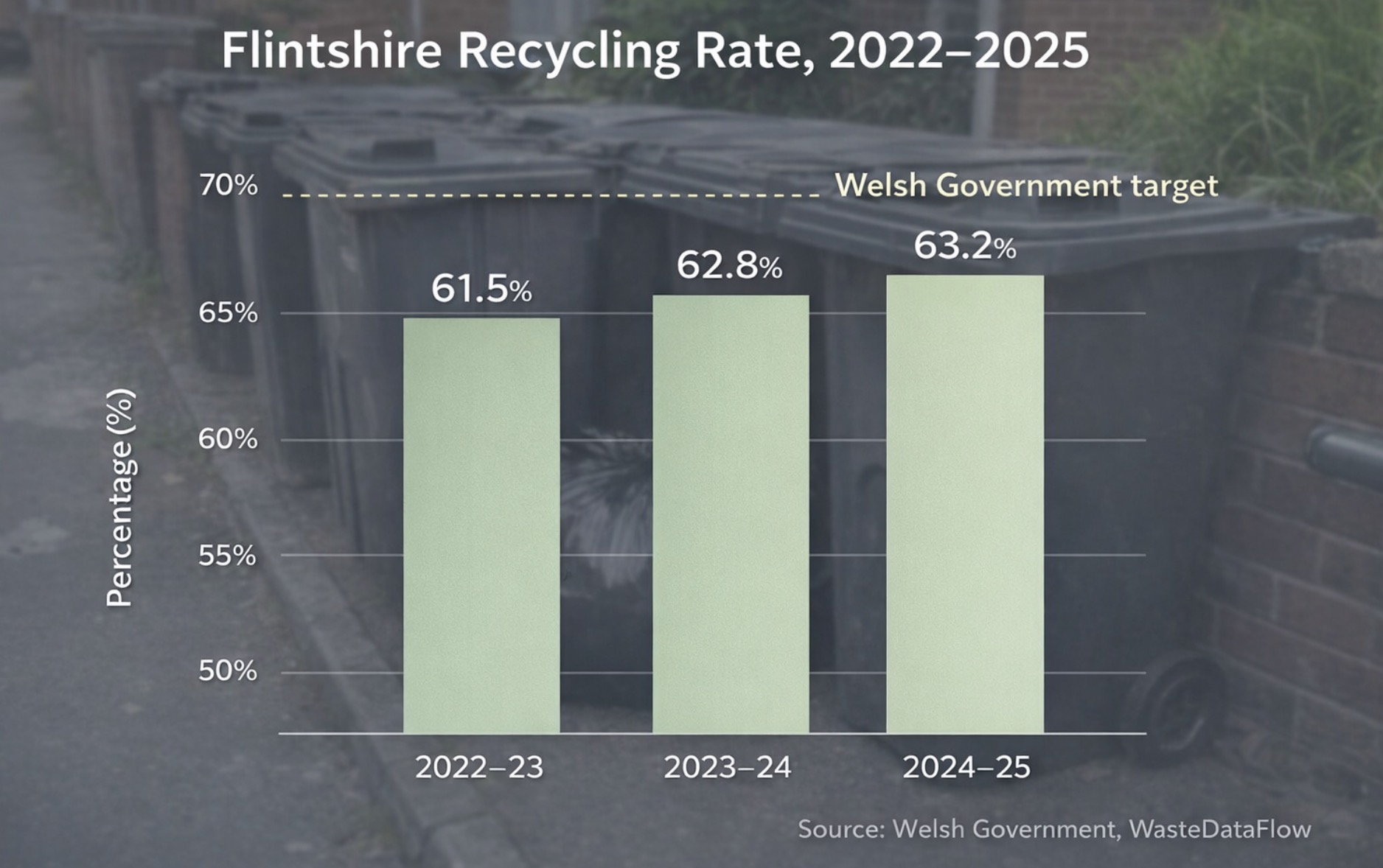
New local authority waste figures published on Thursday 29 January show Flintshire reused, recycled or composted 63.2% of its municipal waste during the 2024–25 financial year. This was up from 62.8% the previous year, but below the national target of 70%.
The figures do not reflect the impact of Flintshire’s move to three-weekly black bin collections, which began in April. Any sustained effects from the service change are expected to be reflected in future data releases.
Responding to the figures, Katie Wilby, Chief Officer for Streetscene and Transportation at Flintshire County Council, said: “We acknowledge that Flintshire’s recycling performance has fallen short of Welsh Government targets for the last few years.
“The Council has a clear plan in place to improve recycling rates and reduce waste, as set out in our Resource and Waste Strategy for 2024–2030.
“Some of the practical measures introduced so far include the move to three-weekly black bin collections in April 2025, a new ‘visible waste’ process at our Household Recycling Centres and ongoing work to raise awareness of the importance of recycling.
“These changes are already having a significant impact on our recycling performance, and we have achieved a rate of 70% – in line with the statutory target – for the first two quarters of 2025–26, suggesting we are on track to meet the target this year.”
Across Wales, the overall recycling rate increased from 66.6% in 2023–24 to 68.4% in 2024–25. Twelve of the country’s 22 local authorities met or exceeded the 70% target, while ten, including Flintshire, did not.
The Welsh Government said the data shows continued progress towards its long-term ambition of becoming a zero-waste nation.
The figures are the first annual snapshot since new workplace recycling regulations were introduced in April 2024, requiring businesses, public bodies and third sector organisations to separate recyclable materials.
According to the data, an additional 8,187 tonnes of recyclable material was collected from workplaces across Wales during the year, a 42% increase compared with the previous year. Residual waste collected from workplaces fell by 15.8%.
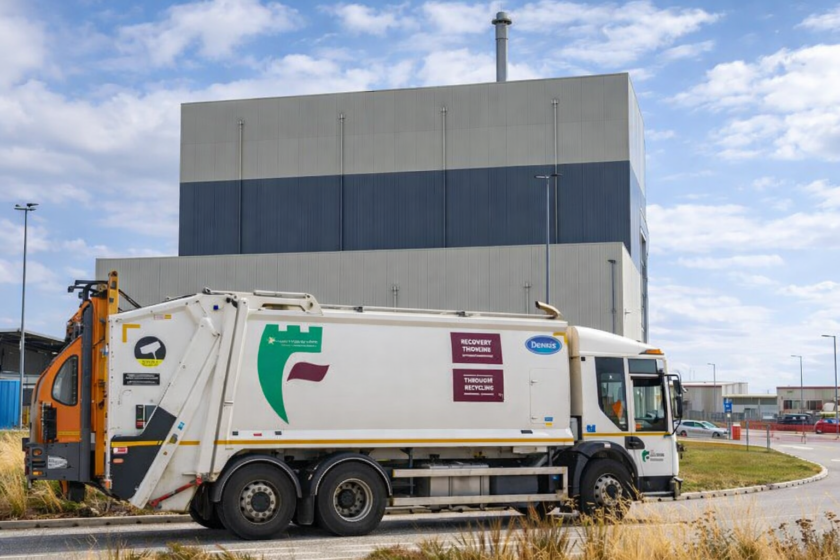
Within North Wales, Flintshire recorded the lowest recycling rate among the five councils that jointly manage residual waste through the North Wales Residual Waste Treatment Project.
Conwy was the only authority in the group to meet the target, with a recycling rate of 70.6%. Denbighshire recorded 65.3%, Gwynedd 64.9% and the Isle of Anglesey 64.6%.
Despite missing the statutory target, the data shows a steady improvement in Flintshire’s recycling performance over recent years, rising from 61.5% in 2022–23 to 63.2% in 2024–25.
The latest figures follow several years in which Flintshire failed to meet previous Welsh Government recycling targets, raising the prospect of financial penalties and prompting a major overhaul of household waste collections.
As part of that overhaul, the council introduced three-weekly black bin collections in a bid to reduce residual waste and increase recycling.
In a separate update issued in November, the council reported a reduction in waste sent to Parc Adfer at Deeside Industrial Park following the service change.
Almost 3,000 fewer tonnes of black bin waste were sent to the facility in the first six months after the new system was introduced, according to the council.
Parc Adfer, which has been operating since 2019, is used by Flintshire, Conwy, Denbighshire, Gwynedd and the Isle of Anglesey to manage residual household waste by converting non-recyclable material into energy.
Check live fuel prices near you before you set off.
Spotted something? Got a story? Email news (@) deeside.com

NEW: Add Deeside.com as a preferred source on Google to see more of our trusted coverage when you search.
Latest News