New Welsh Government report shows Flintshire is North Wales’s biggest energy consumer and biggest renewable generator
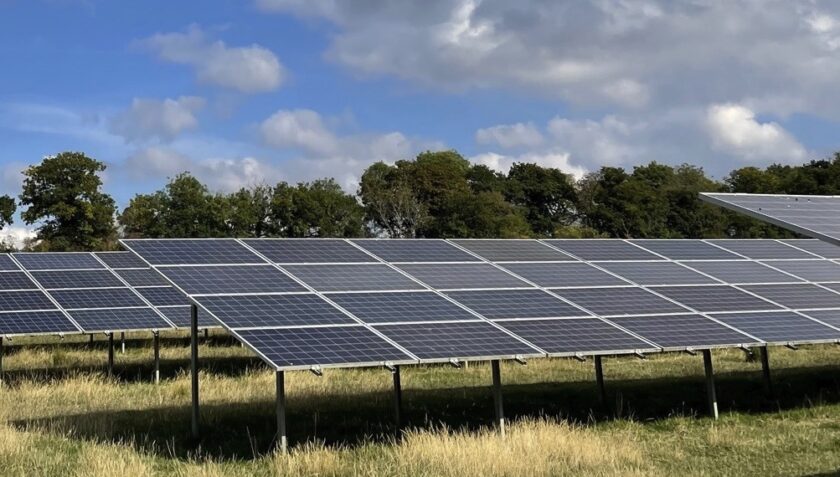
Wales generated renewable electricity equivalent to 54% of what it consumed in 2024, a new report has revealed, but the county at the centre of that picture is Flintshire.
The report published on Wednesday by the Welsh Government, produced by energy consultancy Regen, shows Flintshire used more energy than any other authority in North Wales in 2023, at 4,375 GWh.
It also generated more renewable energy than any other North Wales authority, at 850 GWh in 2024.
The gap between those two numbers is filled, in large part, by the Connah’s Quay gas-fired power station.
The station has a capacity of 1,380 MW.
The Regen report states that Connah’s Quay and the Pembroke gas station in south Wales together produced 82% of all Welsh fossil-fuel electricity in 2024.
Fossil fuel generation still accounts for 64% of Wales’s total electricity output.
Wales’s target is for renewable electricity generation to meet 70% of consumption by 2030 and 100% by 2035.
To reach that 2035 figure, the report concludes, renewable generation across Wales needs to triple.
Cabinet Secretary for Economy, Energy and Planning Rebecca Evans MS published a written statement alongside the report today and also announced a new Renewable Energy Sector Deal between the Welsh Government and the renewables industry, setting out 78 commitments to accelerate wind, solar, marine and hydro development.
Ms Evans said the conflict in the Middle East “has further highlighted the importance of energy independence.”
Industry body RenewableUK Cymru, welcoming the sector deal, said Scotland had secured more than £18bn in new clean energy investment support over the last decade while Wales had attracted less than £1bn.
The report does not break down how much electricity Connah’s Quay alone generated in 2024, but notes that both Connah’s Quay and Pembroke recorded lower output in 2024 than in 2023, while still accounting for the large majority of Welsh fossil-fuel generation between them.
The future of the Connah’s Quay site is the subject of a live planning process.
A proposed low-carbon gas turbine power station with carbon capture technology at Connah’s Quay is currently under examination by the Planning Inspectorate.
A hearing is taking place this week at the St David’s Hotel in Ewloe as part of that examination.
At Parc Adfer, the energy-from-waste facility on Deeside Industrial Park, the picture is more advanced.
Operator Enfinium has submitted a planning application to install full-scale carbon capture and storage at the 21 MW site.
A pilot carbon capture plant was already installed at Parc Adfer in April 2025.
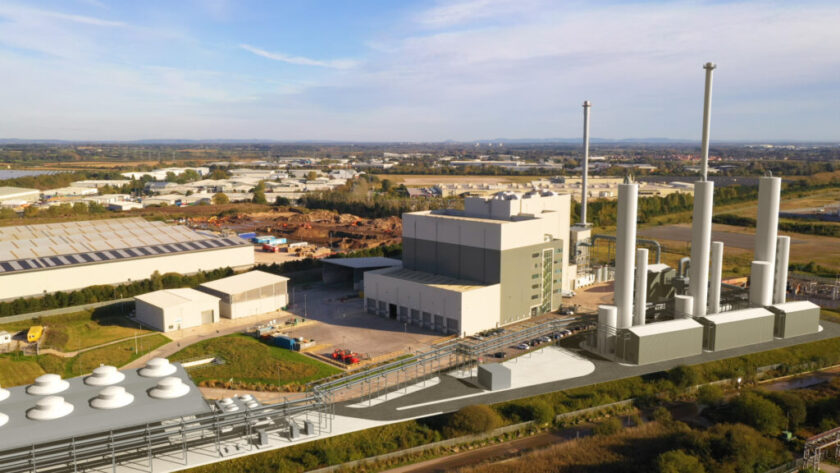
The Regen report names Parc Adfer as one of only two operational energy-from-waste sites in Wales, alongside Trident Park in Cardiff.
Together they generate approximately 270 GWh of electricity annually.
Flintshire’s renewable energy picture is not limited to the industrial scale.
The Shotton Paper Mill is identified in the report as one of the two largest biomass combined heat and power generators in Wales, generating approximately 50 GWh in 2024.
The data tables in the report show Flintshire has 8,137 solar PV installations, the majority on domestic rooftops, with a combined capacity of 96 MW.
Onshore wind, however, is almost absent — 22 projects with just 2 MW of combined capacity, the lowest figure of any North Wales authority by a significant margin.
Neighbouring Denbighshire has 147 MW of onshore wind installed.
The energy cost picture for Flintshire households sits uneasily alongside these generation figures.
Deeside.com has previously reported that Delyn MS Hannah Blythyn MS raised the issue in the Senedd, stating that North Wales has the highest daily electricity standing charge in England and Wales, at just over 69p per day.
The comparable rate for London is just over 46p per day.
South Wales residents face a charge of just over 51p.
Ms Blythyn said at the time: “It’s not fair, not in the interests of my constituents and needs rectifying.”
She added: “Whilst I recognise to change this is outside the powers of this place and Welsh Government, I am sure you will agree with me that this is an unacceptable situation for the people of North Wales.”
The high standing charges in North Wales are linked to the costs of the regional distribution network operator serving the area, which covers north Wales and Merseyside.
The Welsh Government’s 2035 renewable target includes an adjustment the previous 2030 target did not — it now accounts for the roughly 9% of electrical energy lost in transmission and distribution between generation and consumption.
The Regen report projects Welsh electricity demand will rise from 14.5 TWh in 2024 to 23.8 TWh in 2035, driven by the shift from gas boilers to heat pumps and petrol cars to electric vehicles.
North Wales recorded the highest number of new renewable installations of any Welsh region in 2024, at approximately 7,900.
Of those, 58% by capacity were heat pump installations.
The full Energy Generation and Use in Wales: First Combined Edition report is available on the Welsh Government website.
Check live fuel prices near you before you set off.
Spotted something? Got a story? Email news (@) deeside.com

NEW: Add Deeside.com as a preferred source on Google to see more of our trusted coverage when you search.
Latest News