From Braces to Biomechanics: Adult Scoliosis Rehab Is Being Rewritten in the Capital
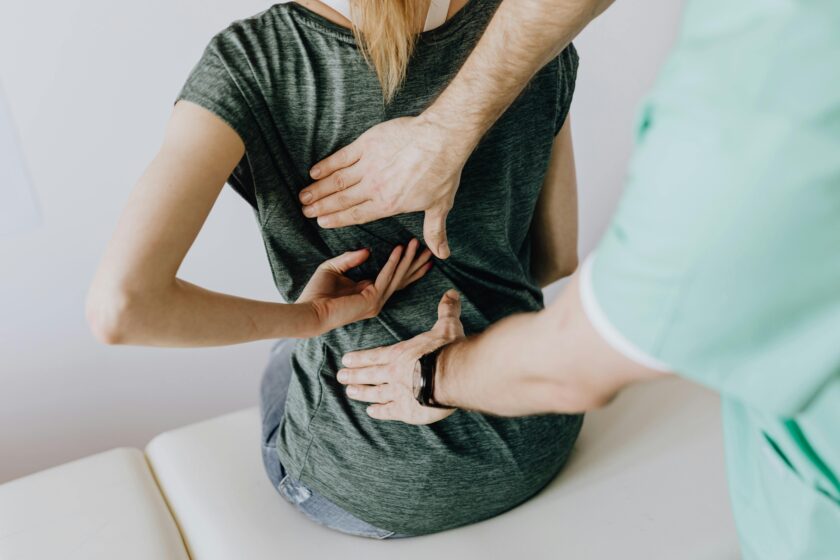
The End of Guesswork in Back Pain Recovery
In London, in 2025, Catherine’s back rehabilitation journey stands as both a technically significant scoliosis case and a profoundly human story of reclaiming her life back.
Her spine, shaped by double scoliosis curvature that disrupted the natural line of her vertebral column, had long forced her muscles into an exhausting imbalance.
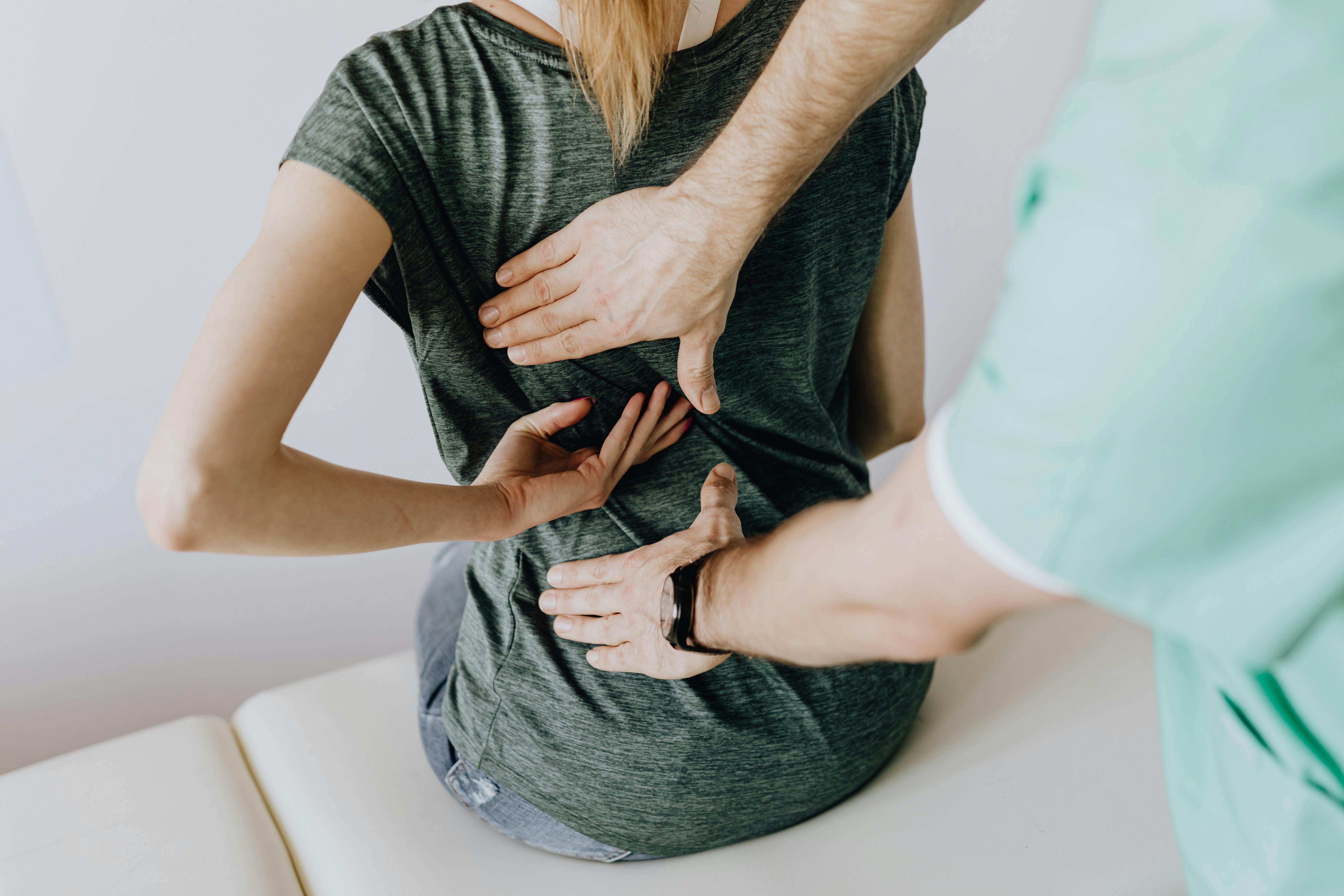
Some of her muscles constantly tightening to hold her upright, others weakening from underuse whilst making her spine to twists.
Catherine’s body was in pain and working asymmetrically, like a tug-of-war where one side of her body kept winning.
When she explained this to her child she put it as: my back was “tilting like a wonky tower,” hurting badly when I stood, walked, or sat down.
For months she had lived inside a body ruled by tightness, fatigue, and the slow, predictable ache of a spine that had long since grown tired of compensating.
So what is scoliosis and why causes so much pain?
According to the best Scoliosis specialist London based, scoliosis, defined by clinicians as a lateral spinal curve of at least 10° measured by the Cobb angle, is a spine related condition affecting millions.
And because 80-85% of scoliosis cases are idiopathic, with no known cause, many adults internalised the idea that nothing could truly be done beyond managing symptoms.
According to Scoliosis Support and Research (SSR), more than two million people in the UK live with scoliosis.
This is an unseen condition that quietly reshapes the way many move, sit, stand and feel in their own bodies.
When the Spine Tells a Story: The Quiet Signs of Scoliosis
Scoliosis often feels like a quiet tale unfolding in the body. It may start with an ache deep in the thoracic, lumbar, or mid-back – an ache that occasionally turns sharp or stabbing, as if the spine is trying to speak.
The muscles soon join the story, tightening into stubborn knots, cramping without reason, or snapping into sudden spasms that stop you in your tracks.
When you bend forward, the curve reveals itself more openly, lifting one side of the rib cage into a small but undeniable rib hump.
And with degenerative scoliosis, a slow, persistent low back pain lingers, settling into everyday life like a character who refuses to leave the scene.
To picture scoliosis, imagine the spine not as a rigid column, but as a tall, flexible ribbon guiding every step and gesture.
In scoliosis, that ribbon does not simply tilt; it bends, twists and rotates in three dimensions (that’s its tridimensionality), altering the body’s natural engineering with surprising complexity, putting pressure on your spine vertebrae and causing you both background and excruciating back pain.
Most people know scoliosis as a “curved spine,” but the truth is far more intricate.
Understanding Scoliosis as a Dynamic, Multi-Planar Condition: Why Every Curve Behaves Differently and Demands Precision Rehabilitation
The vertebrae do not just lean sideways – they swivel, like tiny turning shells – changing the balance of muscles, joints and posture above and below them said Jazz Alessi the head of Scoliosis Rehabilitation Department and founder of Personal Training Master.
For some, the spine forms a single graceful arc, as if the back has been drawn into a soft bow.
For others, two opposing curves develop, shaping the spine into a distinctive “S,” each curve reacting to the other like partners in an uneasy dance.
And that is why its impact differs from person to person: the size, shape and behaviour of each curve determine how scoliosis feels – whether it strains muscles, affects breathing, alters balance, or simply makes daily tasks more tiring than they ought to be.
Scoliosis is not just a condition of the spine; it is a quiet reshaping of how a body moves through the world.
“Adult scoliosis rehabilitation requires a highly specific approach because the scoliotic spine behaves like a dynamic, multi-planar system under load. Rotational asymmetries create altered neuromuscular recruitment patterns; intercostal spacing becomes uneven, affecting your lungs and respiratory mechanics; proprioceptive becomes distorted by long-term compensation; and the paraspinal musculature develops torque-dependent fatigue profiles not seen in non-scoliotic spines. When you retrain these elements in based on a comprehensive assessment and in harmony, the entire system reorganises, strength, posture, gait, breath, everything continues Jazz.”
This assessment based scientific framework, he notes, is why laser sharp scoliosis rehab personalisation is non-negotiable.
London is witnessing a new scoliosis rehab method, giving way to an assessment-based movement-first, biomechanics-driven approach, where the spine through training is treated as a dynamic system capable of adaptation.
Amongst other things you learn coordinated rotation, breath-led expansion, load tolerance, and above all – expertise you will need to successfully maintain the results over the long term – is the architecture of modern biomechanics scoliosis rehab.
Catherine’s story is not unique.
People like Catherine discover a posture-led recovery journey.
Catherine suffered from severe pain for 10 years.
Whilst not being consistent in her training due to her business travelling’s, Catherine did not think that a few months of training could make such a huge difference.
Yet, using this new assessment-based scoliosis method before she left London for a short break Catherine reported something she once thought impossible: an 80–85% reduction in back pain, a 50-60% increase in strength and flexibility.
She also doubled her ability to walk much faster and for an hour and a half without pain, very different from the 30-40 minutes that used to stop her in her tracks because her back pain would have become unbearable.
London has become the epicentre of a new method to adult scoliosis rehab London, where precise assessment and laser sharp customised movement replaces guesswork, and confidence in motion replaces caution.
People like Catherine are asking:
“What is working now, and why does it matter so much for those who were once told that scoliosis simply “is what it is”?
Why Adults Are Choosing Movement-Led Scoliosis Recovery Over Static Fixes
Catherine often describes the early months of her journey as “a kind of awakening, not the loud, dramatic kind, but the quiet shift that happens when your body begins to remember how it was meant to move.”
She arrived with the same pain points most adults carry after years of living with scoliosis:
“the restriction that makes turning in bed feel uneven, the slow deconditioning that creeps in with every flare-up, and the exhaustion of being handed generic plans that never quite understood my curve, my compensations, my life.”
For years she had been told to protect her back by doing less, fewer twists, fewer loads, fewer risks.
But inside her private studio, the philosophy was different.
This was assessment based and movement-led scoliosis recovery.
Each customised session was at an expert level in its precision: the breath work that expanded the concave side of her rib cage, the micro-rotations that taught her thoracic spine to sequence again, the grounding drills that rewired balance from foot to pelvis to spine.
Catherine said, “I began walking taller without thinking about it!.”
Sleep came easier because the muscles guarding her curve finally learned to soften.
Desk work, once a battlefield of slumping and bracing, became manageable with the posture correction training that gave her a new sense of alignment.
The fear-based “avoid this, avoid that” mindset that had defined so much of her adult life was replaced by something sturdier: back confidence through exercise.
And Catherine’s progress, her resilience, her stability, her reclaimed ease of movement, is living proof of what happens when a body finally receives the support and education it always needed.
In this new era of adult scoliosis rehabilitation, empowerment does not come from being told what to avoid.
It comes from assessing correctly, learning how to move, deliberately, intelligently, and bravely without risking a back pain flare up, until strength becomes the new normal and life no longer revolves around protecting the spine, but living fully with it.
London’s Biomechanics Playbook: Data, Coaching & One-to-One Strength
When Catherine stepped into her first data sessions, she said it felt “less like physio and more like stepping onto an action film set.”
In London, the most advanced training room, biomechanics-based rehabilitation include metrics that reveal exactly how a scoliotic spine behaves under load, and the bespoke Scoliosis rehab programme to fix your specific problems.
Her curve, like many adult curves, had its own biomechanical signature.
Research carried out by Harvard university shows that scoliotic spines often present asymmetric vertebral rotation, altered sagittal alignment, reduced segmental proprioception, and lateral flexion deficits of up to 20-40% compared to non-scoliotic controls.
Some adults also develop facet joint hypertrophy on the concave side, a subtle change that influences force distribution during gait.
Your rehab must capture these variables using precise movement mapping, not as abstract numbers, but as the spine’s own cinematic language.
Every micro-adjustment Catherine made, a slightly more symmetrical rib expansion, a smoother pelvic shift, a cleaner spinal hinge, was recorded through a suite of scoliosis exercise data tracking tools.
Video playback revealed her progress frame by frame.
And Catherine is not the only one transforming her spine and back health.
This is what Huw. M. opera singer had to say about this new method.
“The customisation of this programme was so focused, that only in a few sessions I began to feel the benefits very clearly… Now I feel very stable and pain free.”
London’s strength lies in this precision, a city where posture performance London is quantified, plotted, and remodelled over time.
As she lives in London – midway through her programme, Catherine realised she had stopped guessing as she had a solid scoliosis rehab programme to follow, a shift many experience when working with a specialist personal trainer London based.
Catherine still remembers the message she sent on the day she realised something had finally changed:
“Hi, hope all is well! Many thanks for all your help these past months, it has been a privilege to train with you… although there was a lot of stop and start there was a major reduction in my pain! I am very pleased and look forward to continuing my program on my own to get stronger.”
For some, the transformation is profound.
Future of Scoliosis Rehab in London: Confidence, Strength & Long-Term Movement
The new future of scoliosis rehab is rooted in expertise that leads to confidence, and a brand new resurgence of life – completely Pain Free.
London’s movement-based recovery London approach proves that resilience can be trained, measured, and strengthened year after year.
Through posture confidence training, adults are discovering that progress is possible and achievable with the correct trainer.
And as scoliosis rehab innovation accelerates, one truth becomes clear: biomechanics can support your spinal health; and change your life from struggling to thriving.
Check live fuel prices near you before you set off.
Spotted something? Got a story? Email news (@) deeside.com

NEW: Add Deeside.com as a preferred source on Google to see more of our trusted coverage when you search.
Latest News